Back to Blog
Community

Building a Community: How Local STEM Workshops Change Lives

Liam Salcedo January 12, 2026 7 min read
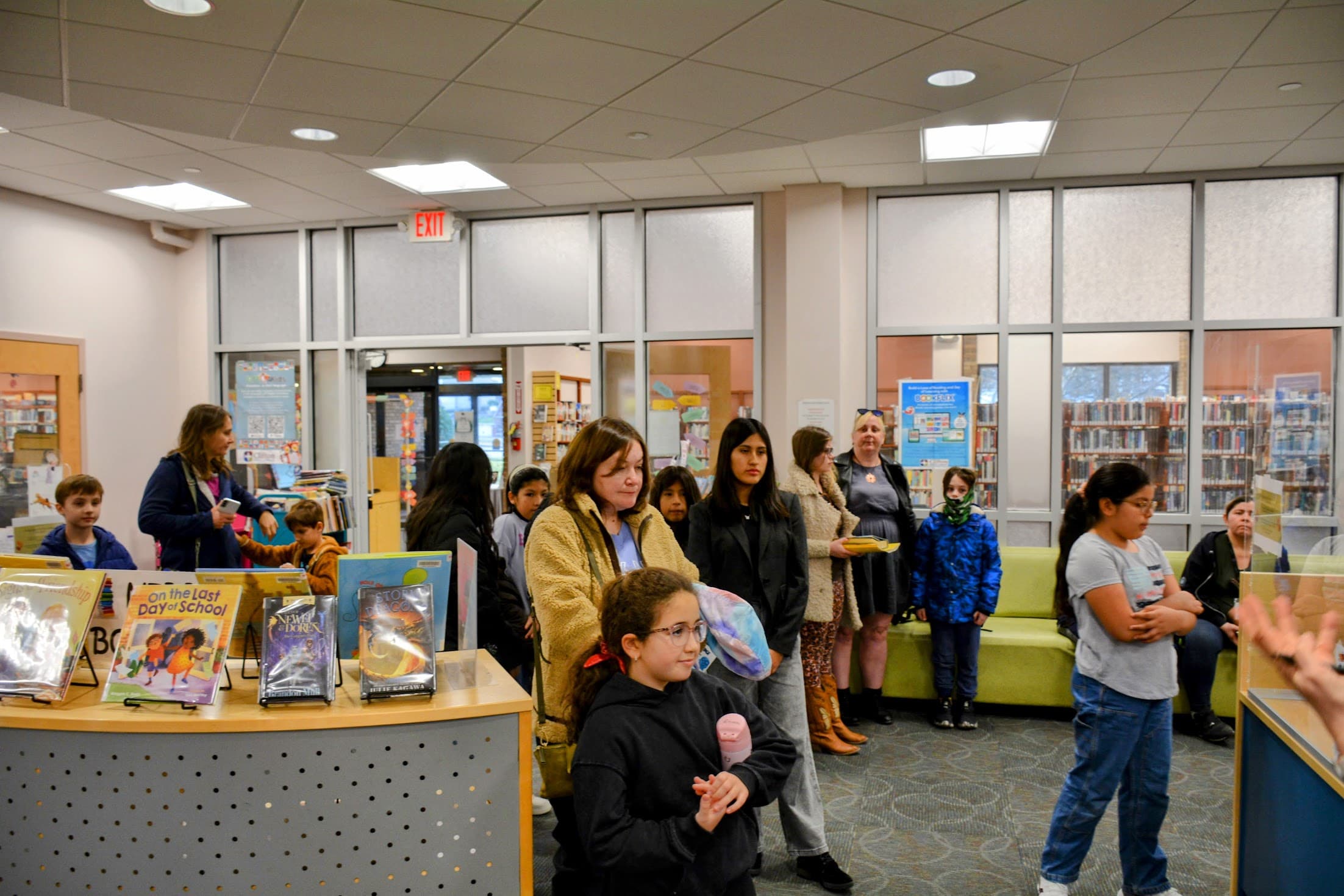
Students at a community STEM workshop

The hardest part of starting Avanza STEM was not building the curriculum. It was not finding the venues, organizing the materials, or setting up the website. The hardest part was convincing myself that showing up to a library with a box of popsicle sticks and a laptop could actually matter.

After running programs at the Clifton Public Library and the Allwood Branch Library in New Jersey, I can say clearly: it does. Not because of what students learned about engineering or coding — though they learned a lot. But because of what changed in the room when a Hispanic kid realized that someone who looked like them cared enough to show up and teach them.

What a Workshop Actually Looks Like

Our current format is a three-week series covering building, coding, and AI. Each session runs about 60–90 minutes, is completely free, and requires no prior experience from students or parents.

Week 1 is engineering. Students learn what different kinds of engineers do — civil, mechanical, electrical, chemical — and then build something. At Clifton, this meant bridge-building and a Coke and Mentos demonstration that turned into a 20-minute conversation about physical versus chemical reactions that nobody wanted to end.

Week 2 is coding. Students write Python for the first time. By the end of the session, each student has built a simple interactive quiz that asks questions and responds to the answers. We print out their code for them to take home. Several parents have told us that their child showed it to every adult in the house.

Week 3 is AI. We cover what AI is, how it learns, where it is already in their lives, and — just as importantly — why you should not just trust it blindly. Students train an image classifier on Teachable Machine and watch the model get better as they add more training data.

Why Libraries Are the Right Venue

Public libraries are underutilized community infrastructure. They are already trusted spaces in neighborhoods, they are designed for learning, and they are genuinely committed to free public programming. They are also one of the few institutions that Hispanic families without a lot of discretionary income can access without any financial barrier.

  • No cost to attend — families do not need to budget for it
  • Familiar, safe space — libraries carry authority without intimidation
  • Existing relationship with the community — librarians often know which families would benefit most
  • Flexible rooms and technology — many libraries have maker spaces, projectors, and WiFi
  • No school affiliation — students from multiple schools can attend, widening the reach

The libraries have been incredible partners. The staff at both Clifton and Allwood went out of their way to promote the program to families, set up the rooms, and create an environment where students felt welcome before we even arrived.

What We Have Seen in the Room

I want to be careful not to write this as a collection of heartwarming anecdotes that make the work sound tidier than it is. Some sessions go slowly. Sometimes a student cannot get their code to run and gets frustrated. Sometimes parents are skeptical. That is all real.

But there are also moments that stay with you. A 4th grader in Clifton who finished his Python quiz and immediately started adding more questions without being asked. A parent at Allwood who came up after the session and said, in Spanish, that no one had ever brought something like this to their neighborhood before. A group of siblings who argued productively for 15 minutes about whether the Coke-Mentos reaction was physical or chemical before one of them looked up the answer on their phone and shouted "I was right!"

Those moments are not incidental. They are the point. Students who experience their own curiosity being taken seriously in a structured learning environment are more likely to seek out more learning. That is what we are trying to create.

The Representation Problem — and Why It Is Ours to Solve

Hispanic students make up about 27% of K–12 public school students in the United States. They represent less than 8% of STEM degree holders and less than 7% of the STEM workforce. That gap does not come from a lack of talent or interest. It comes from a lack of exposure, mentorship, encouragement, and access to the kind of low-stakes, safe experimentation that builds confidence over time.

Representation in who teaches matters as much as representation in who attends. When a Hispanic instructor runs a coding workshop for Hispanic kids, the message embedded in the room — before a single line of Python is written — is that this is a space for people like us. That message is not something a curriculum can deliver. It has to be lived.

The Gap We Are Trying to Close

Research consistently shows that students are more likely to pursue a career when they see someone who looks like them doing it. Visibility is not a soft benefit — it is a structural factor in who ends up in STEM.

How to Bring a Workshop to Your Community

If you have a space and want to bring these programs to your neighborhood, the process is simpler than you might think. Here is how to get started:

  1. 1

    Identify a venue

    Public libraries are the best starting point. Community centers, churches, and school cafeterias can also work. You need space for 10–20 students at tables, reliable WiFi, and access to a projector or large screen.

  2. 2

    Connect with us

    Reach out through our contact form. We can discuss the curriculum, the materials needed, and how to promote the program to your community. We have done this twice and can share everything we learned.

  3. 3

    Promote locally

    WhatsApp groups in Hispanic communities are often the most effective promotion channel. Flyers in Spanish at nearby schools, grocery stores, and churches also work well. Start small — 10 engaged students is better than 25 distracted ones.

  4. 4

    Show up consistently

    Trust is built over time. The first session brings curious families. The second session brings families who heard about the first one. Consistency matters more than any single spectacular event.

What Comes Next

The goal for Avanza STEM in 2026 is to expand to more library branches and community centers across New Jersey, and eventually into other states with large Hispanic populations. We are building a model that can be replicated by any educator or community member who wants to run these programs, with shared materials and a growing community of instructors.

None of this requires a large organization. It requires people who care enough to show up. If you are one of them, we would love to work with you.

Check our workshops page to see upcoming sessions, or reach out if you want to partner on bringing a program to your community. All it takes is a space and the willingness to start.