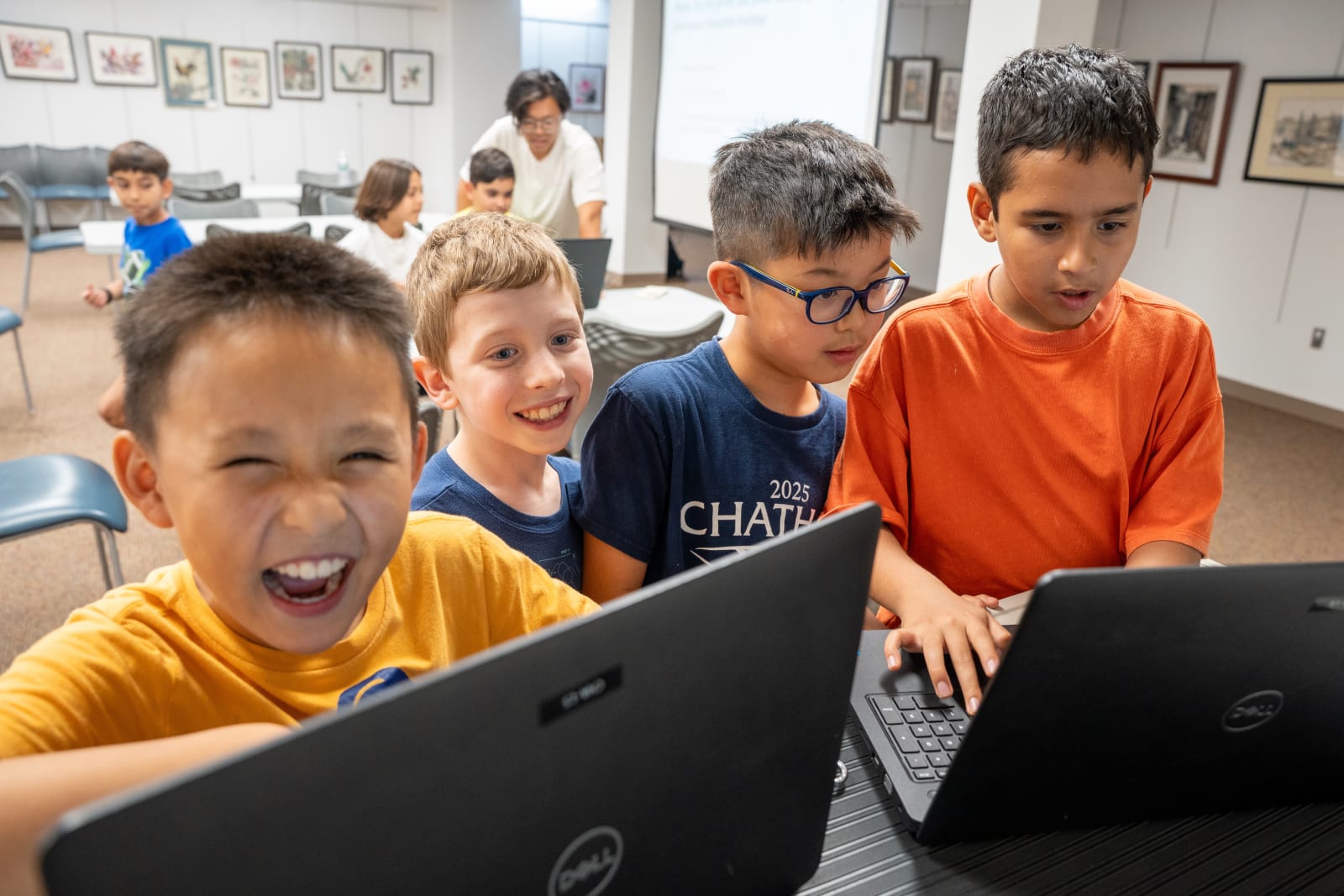
Here is something that catches a lot of people off guard: writing code is turning into a basic skill, right up there with reading and writing. And plenty of kids still get all the way through school without typing a single line of it.
We watched it click for one student at Clifton Public Library. They wrote a program that did exactly one thing: print the word "Hello." Then they spent the next twenty minutes stuffing it with extra questions, bad jokes, and sound effects. Nobody asked them to. They had just figured out they could build things, and they did not want to stop.
It Is Not Really About Code
Here is the part nobody says out loud: the goal is not to turn every kid into a programmer. The goal is what coding does to the way they think.
- Decomposition: chopping one giant problem into pieces small enough to actually solve
- Pattern recognition: noticing when you have seen this exact thing before
- Abstraction: ignoring the noise and zeroing in on what matters
- Debugging: trying an idea, watching it fail, and hunting down why
Engineers use those four moves. So do scientists, writers, and people starting businesses. A kid chasing down a bug in a Python loop is practicing the same thing they will need when an experiment flops or a group project falls apart.
When Is the Right Age to Start?
There is no magic number, but the path usually looks like this:
- 1
Ages 5-7: unplugged and visual logic
Board games and apps like ScratchJr teach kids to put steps in order, and nobody has to touch a keyboard yet.
- 2
Ages 8-11: block-based coding
Scratch lets kids snap together real games and animations. No typing means no barrier, so they get straight to building.
- 3
Ages 12+: text-based languages
Python reads almost like English, professionals use it every day, and it makes a great first real language.
How to Get Started at Home
- Make a free Scratch account and let them poke around
- Watch one short beginner tutorial together, then get out of the way
- Ask them to explain out loud what their program does
- Let them get stuck. Getting unstuck is the whole skill
- Make a big deal out of what they build, even the tiny stuff
A Simple First Python Program
If your kid is ready to write actual code, open a browser editor like Replit or Trinket and type this in:
Try This
name = input("What is your name? ")
print("Hello, " + name + "! Welcome to coding.")
That is a real program. It asks a question, it listens, it answers back. Add a few more questions and suddenly you have a chatbot or a quiz game.
Want the full walkthrough, including how to turn it into a quiz? Take a look at our first Python quiz game guide.
The Bigger Picture
Hispanic students are underrepresented in computer science, and it has nothing to do with ability. It comes down to who gets access, who sees it up close, and who gets told to keep going.
Avanza STEM exists to open doors that should never have been shut in the first place.
“He came home and immediately wanted to show me the program he wrote. He kept adding new lines to it for the rest of the night.”
Try a Free Workshop
If your kid wants to try a free in-person coding workshop, we bring every material you need and you can walk in with zero experience.
See upcoming workshops