Engineering
Popsicle Stick Truss Bridge
Build a popsicle stick truss bridge with Warren truss triangles, then load test it to see compression and tension in action.
Easy · 1-2 hours
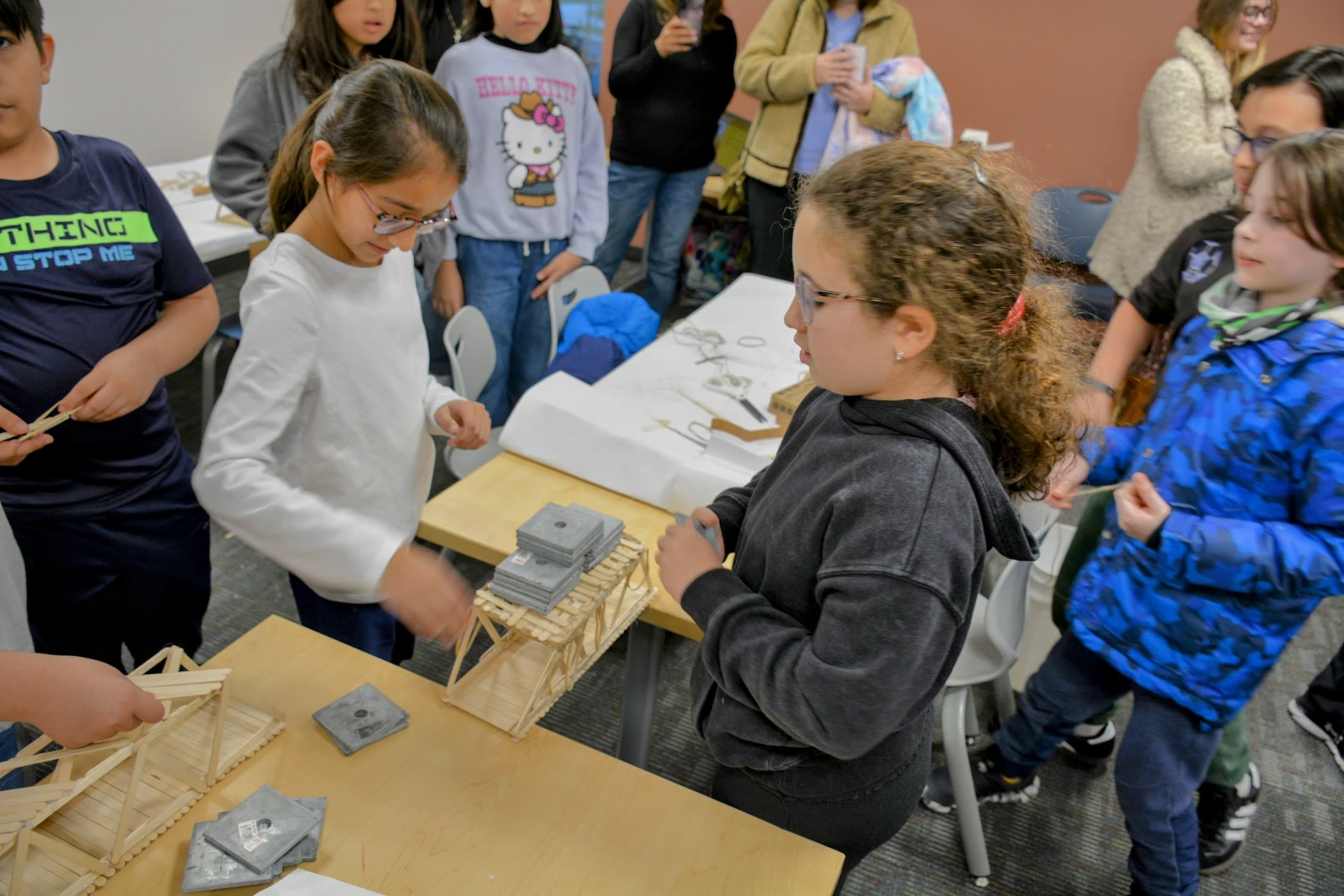
Build along with this video guide:
Popsicle Stick Bridge Build Video
Introduction
Bridge engineers do not just glue random pieces together. They design truss bridges that guide forces through a smart pattern of triangles.
In this step-by-step STEM project, your popsicle sticks turn into a Warren-style truss bridge with named parts, force paths, and a load test at the end.
The Why
A truss bridge spreads force through triangles. The top chord often gets squeezed in compression, the bottom chord gets pulled in tension, and the diagonal web members help move the load across the whole structure.
Warren Truss vs. Pratt Truss
Both designs use triangles, but the pattern changes how forces move through the sticks. For this guide, a Warren-style truss is the most beginner-friendly choice.
- Warren truss
- Uses repeating triangles with diagonals that alternate direction. It is usually the best popsicle stick bridge design for beginners because the pattern is simple to copy and spreads the load evenly.
- Pratt truss
- Uses vertical members plus diagonals that mostly lean toward the center. It can be very strong, but it takes more careful spacing and joint alignment for a first build.
Why Triangles Make Bridges Stronger
A square can lean into a diamond shape when it is pushed from the side. A triangle cannot change shape unless one stick bends, snaps, or a joint fails. That is why a popsicle stick triangle bridge can hold more weight than a flat ladder-style frame.
Printable Warren Truss Bridge Template
Use the bridge diagram and template as a spacing guide before you glue. Trace one side truss first, build the second side directly over the same triangle pattern, and check that both sides match before adding cross pieces.
Open the popsicle stick bridge template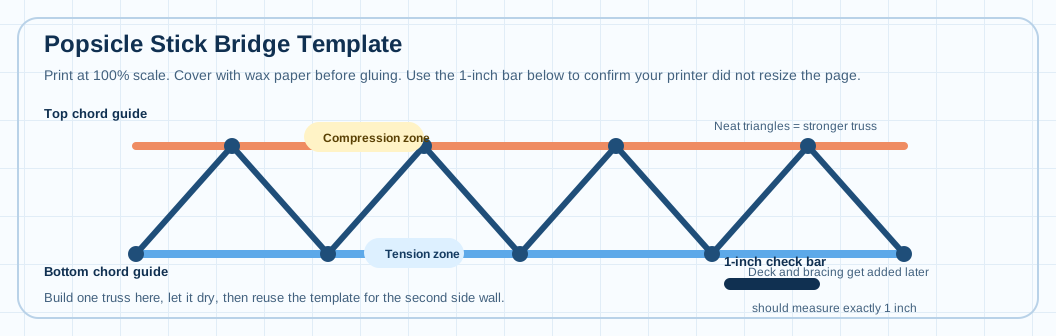
Build steps
Follow along with the video as you complete each step.
- 1
Mark 16 sticks and cut splice pieces
Mark about 16 popsicle sticks at the quarter points. Then cut 4 of them in half so you have short pieces ready for overlapping the long rail joints.
- 2
Glue two long rails
Line up the quarter marks and splice whole sticks together into 2 long rails, each about 4 stick lengths (roughly 18 inches). These become the top and bottom chords.
- 3
Build the first side with 4 triangle panels
Lay one rail flat and glue 4 upright triangles onto it in a row. Keep spacing even because this first side is the template for the whole bridge.
- 4
Add 3 staggered triangles between them
Fill the gaps with 3 more triangles so the side becomes a staggered crisscross truss instead of just a row of separate shapes.
- 5
Cap the truss and sandwich it
Flip the side, glue on the top rail to connect the triangle tips, then add another layer of sticks over the faces to make the truss stiffer.
- 6
Repeat to build the second side
Build a matching second truss the same way. Both sides must be identical or the deck will twist during the load test.
- 7
Let sides harden, then connect them squarely
Wait about 15 minutes. Stand both trusses upright, glue cross pieces between them keeping the sides perpendicular, and leave small overhangs where the video shows.
- 8
Add top, bottom, and diagonal braces
Glue the remaining cross pieces so both top and bottom connectors tie into the side trusses. Add diagonal supports inside and along the outer faces.
- 9
Reinforce, cure again, and load test carefully
Reinforce any weak joints, let the full bridge harden again, then test slowly between two supports. Add weight a little at a time.
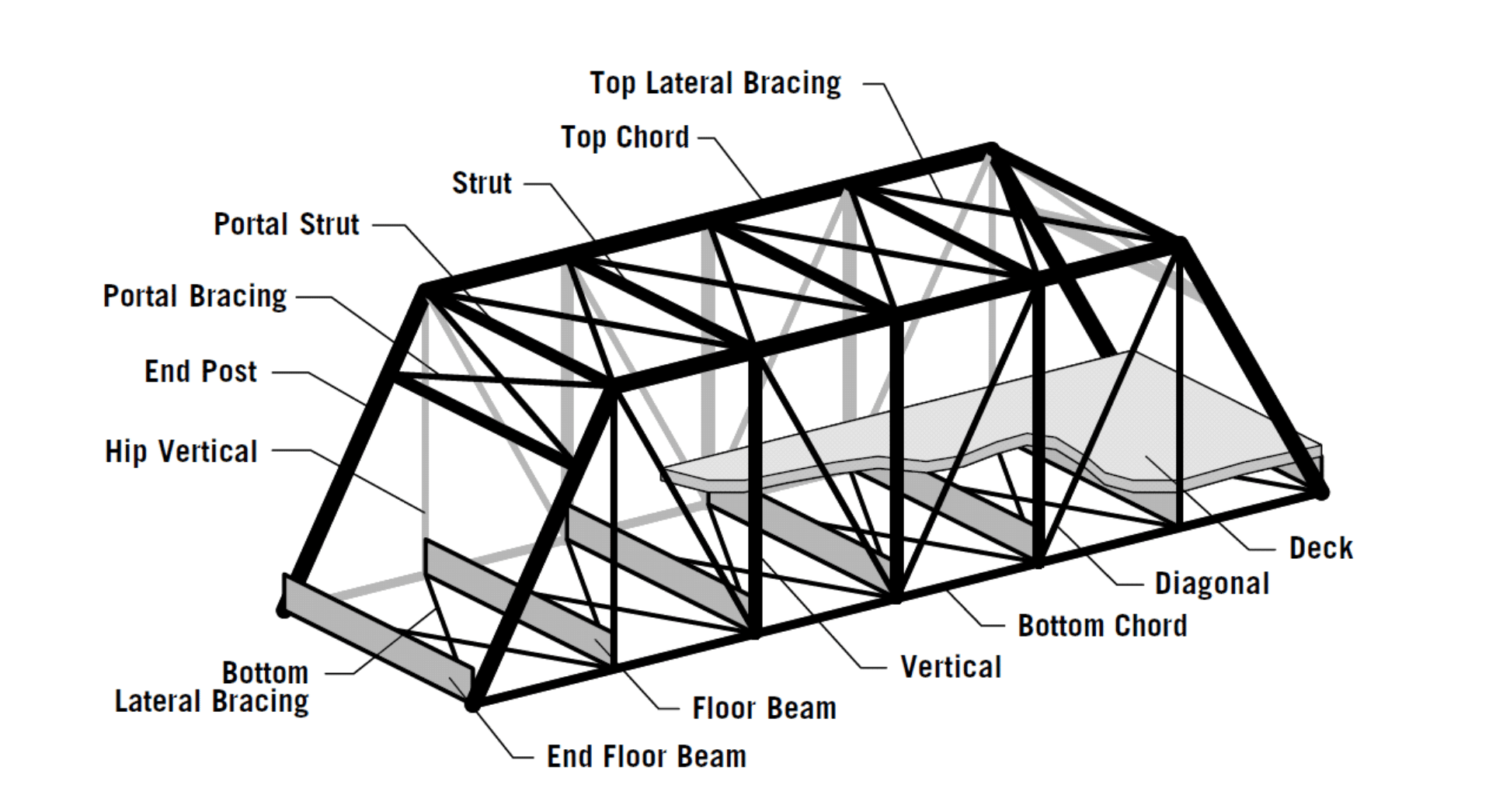
Parts of a truss bridge
Knowing the names helps you understand what forces are acting on each part of your bridge.
- Top Chord
- The long top beam of each truss. It usually feels compression when the bridge is loaded, meaning it gets squeezed.
- Bottom Chord
- The long bottom beam. It typically handles tension, meaning it gets pulled apart when weight presses down.
- Web Members
- The diagonal and vertical sticks inside the truss. They transfer force between the two chords and keep the triangles from collapsing.
- Deck
- The road surface of the bridge. When you add weight, the deck is what receives it first and spreads it into the trusses.
- Top Lateral Bracing
- The sticks across the top that tie both side trusses together. Without them, the sides can lean inward like floppy picture frames.
Best Popsicle Stick Bridge Design for Beginners
Start with two identical side trusses, four main triangle panels, top and bottom chords, and cross pieces that keep the sides square. This design is easier to measure than an arch, uses fewer weird angles than many advanced trusses, and makes it obvious where the bridge fails during a load test.
Popsicle Stick Bridge Variations to Try Next
Once your Warren truss bridge holds weight reliably, change one variable at a time and retest. Each variation below uses the same triangle panels and load-testing steps from this guide.
Single-triangle bridge: replace the repeating Warren pattern with one large triangle on each side. It is faster to build but usually fails at a lower load, which makes it good for comparing against the original design.
Three-truss bridge: add a third truss down the center of the deck to support a wider roadway, then compare how much extra weight it holds versus the two-truss version.
Double-stick members: glue two sticks together for the top and bottom chords only, keep the diagonals single, and see which joints fail first now.
Chopstick bridge: build the exact same Warren truss layout with wooden chopsticks instead of popsicle sticks. The longer chopsticks let you build a wider span, which works well for older students or a class-wide competition.
How Much Weight Can a Popsicle Stick Bridge Hold?
A careful student bridge can often hold many times its own weight, but the exact number depends on stick quality, glue joints, curing time, span length, and how the weight is placed. Record both the bridge weight and the maximum load so you can compare strength-to-weight ratio instead of only chasing the biggest number.
Load-Testing Data Table
Use the same span, center loading point, and weight increments for every trial. This makes the classroom STEM challenge fair and helps students explain which design change actually improved the bridge.
| Trial | Load added | Observation | Next improvement |
|---|---|---|---|
| 1 | 2 lb / 1 kg | No visible sagging | Keep design |
| 2 | 5 lb / 2.3 kg | Middle deck bends slightly | Add deck support |
| 3 | 8 lb / 3.6 kg | One joint starts to separate | Improve joint curing |
| Failure | _____ lb / kg | Where did it break? | Redesign one weak area |
How to Improve Bridge Strength
Let hot glue cure fully before testing; rushed joints usually fail first.
Keep the two Warren truss sides identical so the load is shared evenly.
Add light lateral bracing across the top to stop twisting.
Place the load at the center of the deck instead of hanging it from one side.
Reinforce the first weak joint you observe, then retest with the same method.
Common Mistakes and Troubleshooting
| Problem | Fix |
|---|---|
| The bridge twists during the load test | Check that the two side trusses are the same height and add top lateral bracing between them. |
| A joint pops apart before the sticks break | Use less glue, press the joint flat, and let it cure fully before testing. Thick blobs of glue can peel away. |
| The middle sags too much | Add a better deck connection so the weight is shared by both side trusses instead of one weak point. |
| One side fails first | Build the second side by tracing the first side as a template so the triangle panels match. |
How to Load Test Your Bridge Safely
- 1
Place the bridge between two sturdy supports with the same span every time.
- 2
Put a flat testing platform or cup at the center of the deck so weight is added in one controlled spot.
- 3
Add weight slowly in small amounts, then pause and watch for twisting, sagging, or joint movement.
- 4
Keep hands, feet, and faces away from the bridge while it is loaded.
- 5
Stop the test when the bridge cracks, twists sharply, or can no longer hold the next small weight safely.
Frequently Asked Questions
- What is the strongest popsicle stick bridge design for beginners?
- A Warren truss bridge is a strong beginner choice because repeating triangles spread the load clearly and are easier to measure than curved or highly angled designs.
- How do you make a truss bridge out of popsicle sticks?
- Build two matching side trusses first, connect them with cross pieces, add diagonal bracing, let every glue joint cure fully, then run a slow center load test.
- Why does a triangle truss make the bridge stronger?
- Triangles resist changing shape. That helps the bridge move force through the sticks instead of letting the frame lean into a weak diamond shape.
- How much weight can a popsicle stick bridge hold?
- A careful student bridge can often hold many times its own weight, but the result depends on stick quality, glue joints, span length, curing time, and how the load is added.
- How can this become a science fair or classroom project?
- Keep the span, materials, and testing method the same, then compare one design change at a time, such as fewer sticks, extra bracing, or a different truss pattern.
Related Engineering Projects for Kids
After the Warren truss bridge load test, try a rubber band-powered car to compare stored energy and motion, or build a simple circuit light for another classroom-friendly engineering challenge.