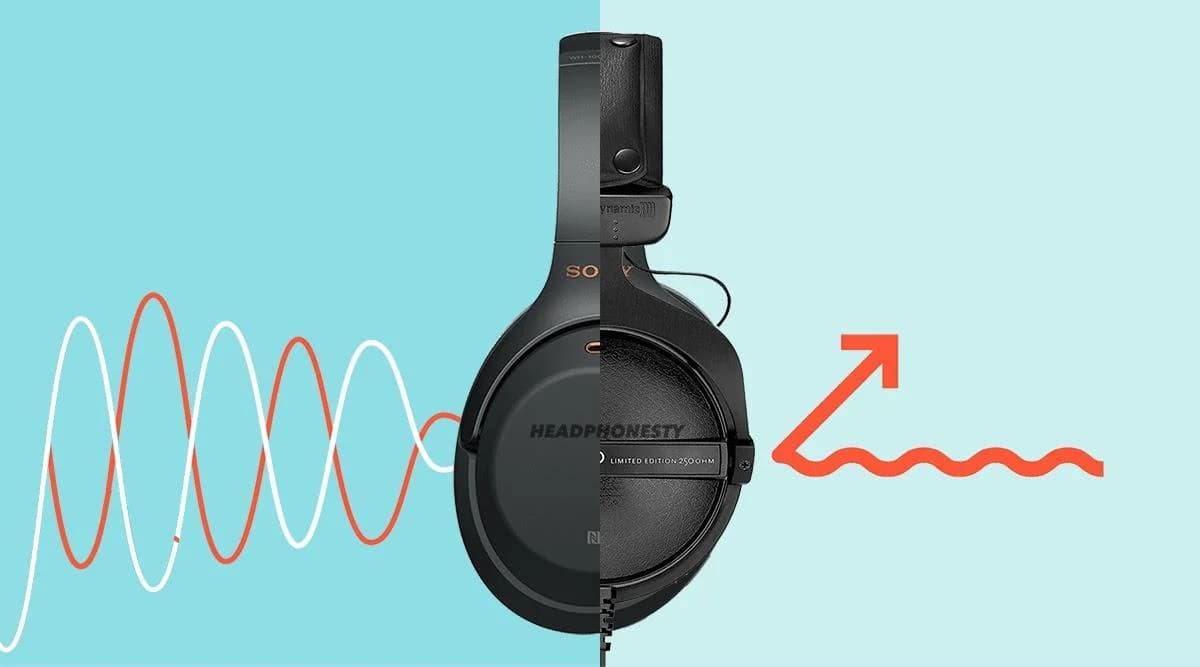
Put on a good pair of noise-canceling headphones in a roaring airplane cabin and press the button. The engine noise does not fade. It vanishes, all at once, like someone unplugged the world. The first time it happens it is genuinely unsettling.
That is not thick padding doing the work. Those headphones are fighting sound with more sound, and it works because of how waves behave.
Sound Is a Wave
Sound is just air being shoved around. Someone talks, their vocal cords vibrate, and those vibrations push and pull the air into waves that travel across the room and rattle your eardrums.
Every sound wave has peaks and valleys, like a wiggly line moving through the air. Loud sounds have tall waves. Quiet sounds have short ones.
Opposite Waves Can Cancel
Now the part that makes all of this possible. Two waves can add together and get louder, but they can also fight. If one wave pushes air forward at the exact instant another pulls it backward, they cancel each other out. Peak meets valley and you get nothing.
That is the whole trick. The headphones generate a wave that is the perfect mirror image of the noise coming at you. The two collide near your ear and mostly erase each other. Scientists call it destructive interference.
The Headphones Listen First
Before they can cancel anything, they have to hear it. Tiny microphones on the outside of each cup pick up whatever is around you, the engine drone, the train rumble, the air conditioner. The electronics inside analyze that wave and build its opposite in a fraction of a millisecond. Then the same speakers playing your music quietly play the anti-noise too.
You never hear that anti-noise as sound. You just hear the original noise get smaller.
Why They Work Best With Steady Sounds
Constant, droning sounds are the easy target. Airplane engines, fans, AC units, train rumble. They repeat, so they are easy to predict, and predicting is most of the battle.
Sudden sounds are a nightmare. A dog bark, a clap, someone shouting your name. By the time the system has analyzed it, the sound has already reached your ear. So the headphones knock it down a little and let the rest through. That is why the world gets quieter and never goes completely silent.
Passive vs. Active Noise Canceling
Two different things are happening at once. Passive reduction is physical: thick cushions sealing against your head, blocking sound the old-fashioned way. Active canceling is the microphone-and-opposite-wave system. Good headphones do both, and the two together are what make an airplane cabin feel like a library.
The Big Idea
Noise-canceling headphones listen to the noise around you, build its exact opposite, and play it into your ear. The two waves meet, cancel, and a big chunk of the noise stops existing.