Engineering
Egg Drop on a Budget
Protect one raw egg using materials that all cost points. Sketch and predict before you build, drop it three times, and score survival divided by what you spent.
Hard · 2 hours
Introduction
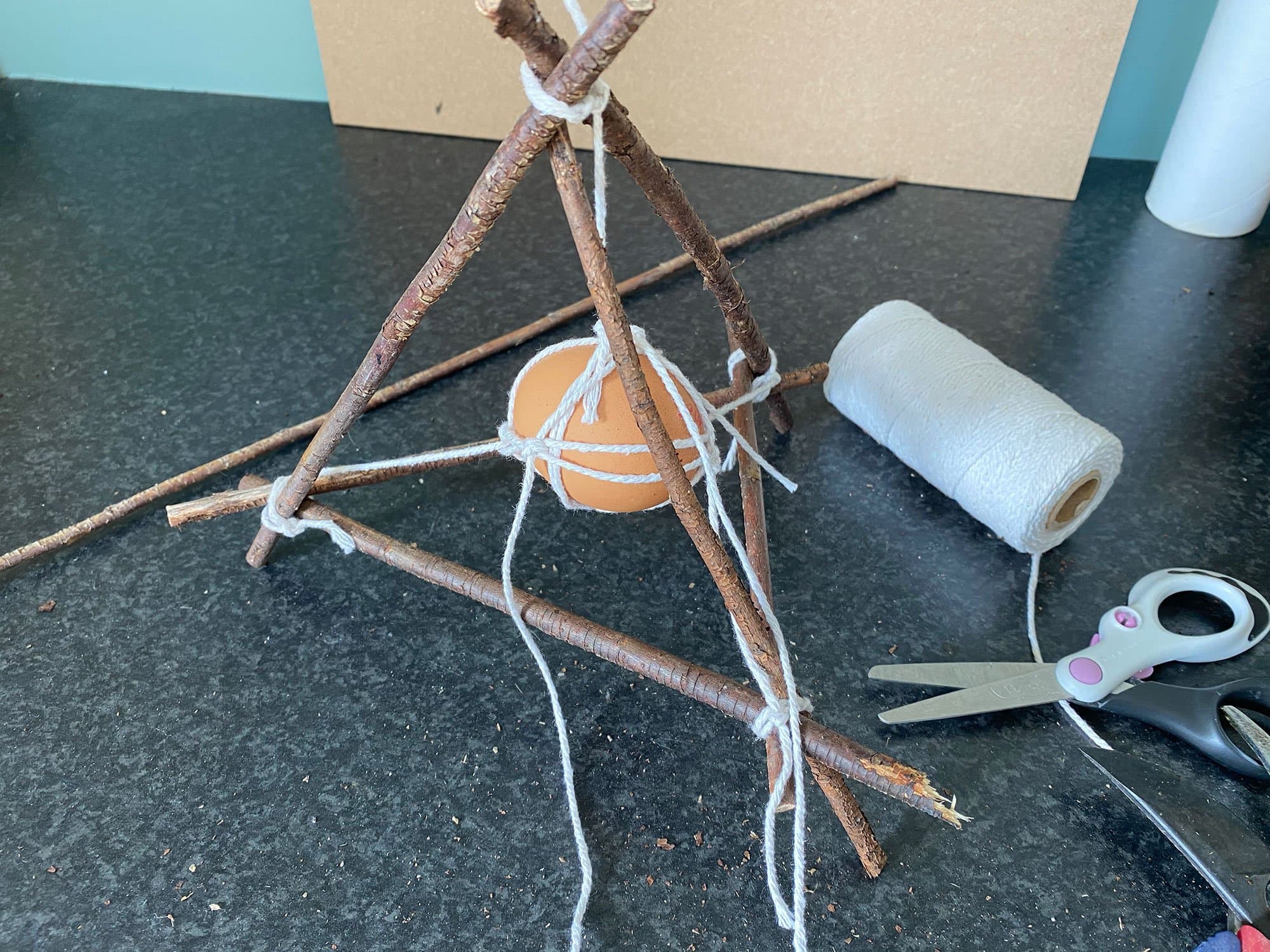
Anyone can protect an egg if they are allowed unlimited padding. Wrap it in a pillow and you are finished, and you have learned nothing.
So this version charges you. Every straw, every inch of tape, every cotton ball costs points, and your score is whether the egg survived divided by what you spent. Suddenly the design matters far more than the padding.
The Why
Real engineering almost never asks for the best possible thing. It asks for the best thing you can build within the money, the weight, or the space you were given, which is called designing under constraint. The budget is what turns this from a craft project into an engineering problem. Writing your prediction down before the drop is the other half: if you only decide what you expected after you have seen the result, you can talk yourself into believing you knew all along.
Step-by-Step Instructions
- 1
Agree on a drop height with an adult and use that exact height every round. A second-floor window or the top of a step ladder both work, as long as the landing zone below is clear.
- 2
Copy out the price list and set a budget for round one. Fifteen points is a good starting limit.
- 3
Sketch your design before you touch any materials. Label which part slows the fall, which part absorbs the impact, and which part holds the egg still.
- 4
Write your prediction: will the egg survive, and which part of your design will fail first? One sentence each, and no changing it afterward.
- 5
Build it, then add up what you actually spent. If you went over budget, take something off before you drop.
- 6
Drop it. Do not throw it downward, just let go. Open it up, photograph the damage, and write what actually happened next to what you predicted.
- 7
Run two more rounds, each on a smaller budget than the last. Score every round as survival divided by points spent, and see whether being poorer forced you to get smarter.
Drop Log
One row per round. The prediction column gets filled in before the drop, never after.
| Round | Budget | Points spent | Predicted result | Actual result | Score |
|---|---|---|---|---|---|
| Row 1, Round | Row 1, Budget | Row 1, Points spent | Row 1, Predicted result | Row 1, Actual result | Row 1, Score |
| Row 2, Round | Row 2, Budget | Row 2, Points spent | Row 2, Predicted result | Row 2, Actual result | Row 2, Score |
| Row 3, Round | Row 3, Budget | Row 3, Points spent | Row 3, Predicted result | Row 3, Actual result | Row 3, Score |
Score is 1 for a surviving egg and 0 for a broken one, divided by the points you spent. A cracked but unbroken egg counts as a half.