Science
Lemon-Powered Batteries
Turn lemons into a real battery and light up an LED by discovering how chemical energy becomes electrical energy.
Easy · 30-45 minutes
Introduction
Did you know a lemon can power a light? It sounds impossible, but lemons contain acid that can kickstart a chemical reaction between two different metals and produce a small electric current.
This project teaches you how real batteries work, why scientists pair different metals together, and what electrolytes do, all from something you can find in your kitchen.
What You'll Learn
How batteries create electricity
Chemical energy and electrical energy
Basic circuits
Conductors and electrolytes
Why different metals create voltage
How It Works
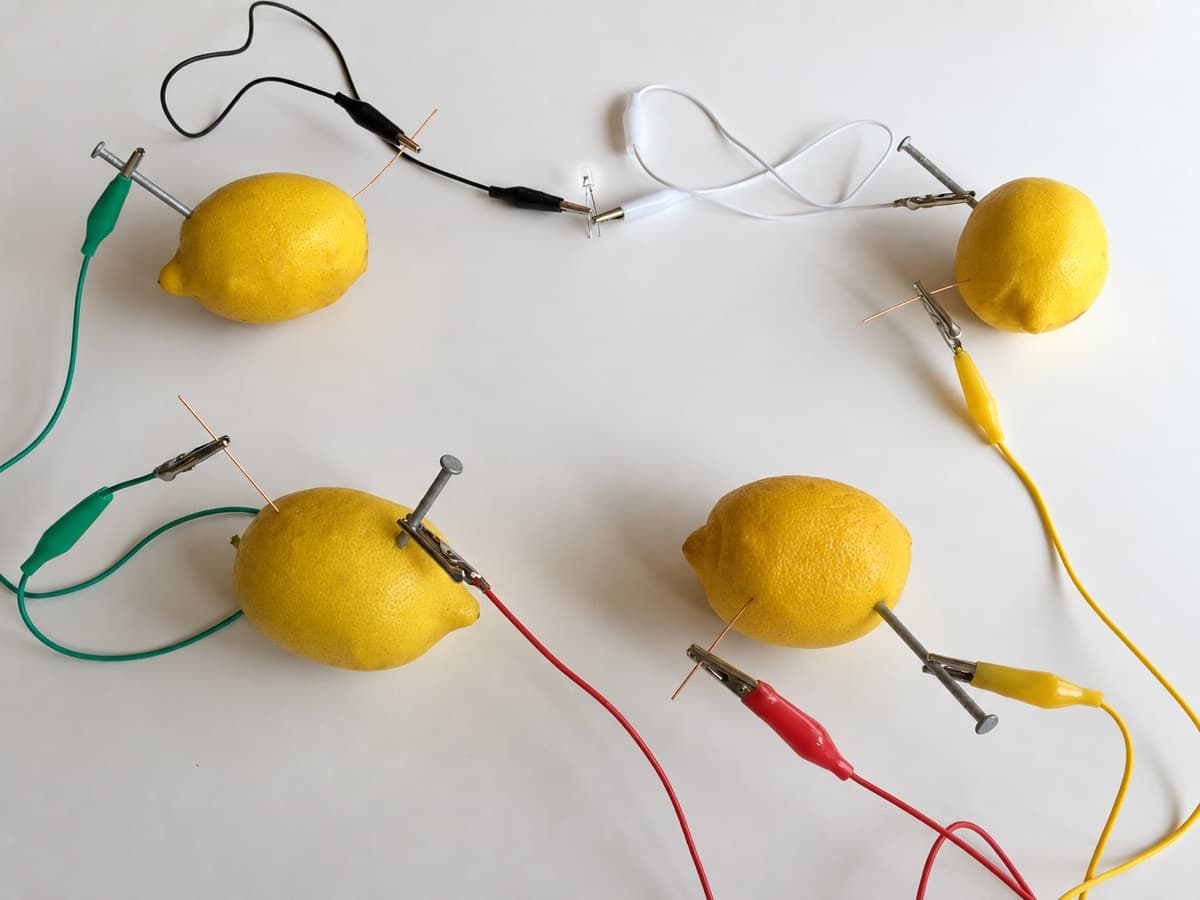
A lemon battery works because of a chemical reaction between two different metals and the acidic lemon juice. The zinc nail and copper piece act as electrodes, while the lemon juice acts as the electrolyte. Electrons move from the zinc through the wires to the copper, creating a small electric current. One lemon may not produce enough power for every device, so connecting multiple lemons in a chain increases the total voltage.
Step-by-Step Instructions
Tip: lightly sand the zinc nails before you start so the metal surface is clean and the reaction works properly.
- 1
Roll the lemons gently on a table to loosen the juice inside.
- 2
Insert one zinc nail and one copper piece into each lemon, making sure they do not touch each other.
- 3
Connect the copper piece from one lemon to the zinc nail of the next lemon using alligator clips.
- 4
Continue connecting lemons in a chain if using multiple lemons.
- 5
Attach the two free ends at either end of the chain to an LED, small digital clock, or voltmeter.
- 6
Observe whether the device turns on or how much voltage the lemons produce.
Science vocabulary
- Electrolyte
- A liquid that conducts electricity by allowing charged particles to move through it. Lemon juice is an electrolyte because of the citric acid it contains.
- Electrode
- A solid conductor that electricity enters or leaves through. In this project, the zinc nail and copper piece are your two electrodes.
- Voltage
- The force that pushes electrons through a circuit. More lemons in a chain means more voltage, which is why extra lemons can power bigger devices.
- Chemical energy
- Energy stored in the bonds between atoms. The acid in the lemon reacts with the metals and releases some of that stored energy as electricity.