Light & Optics
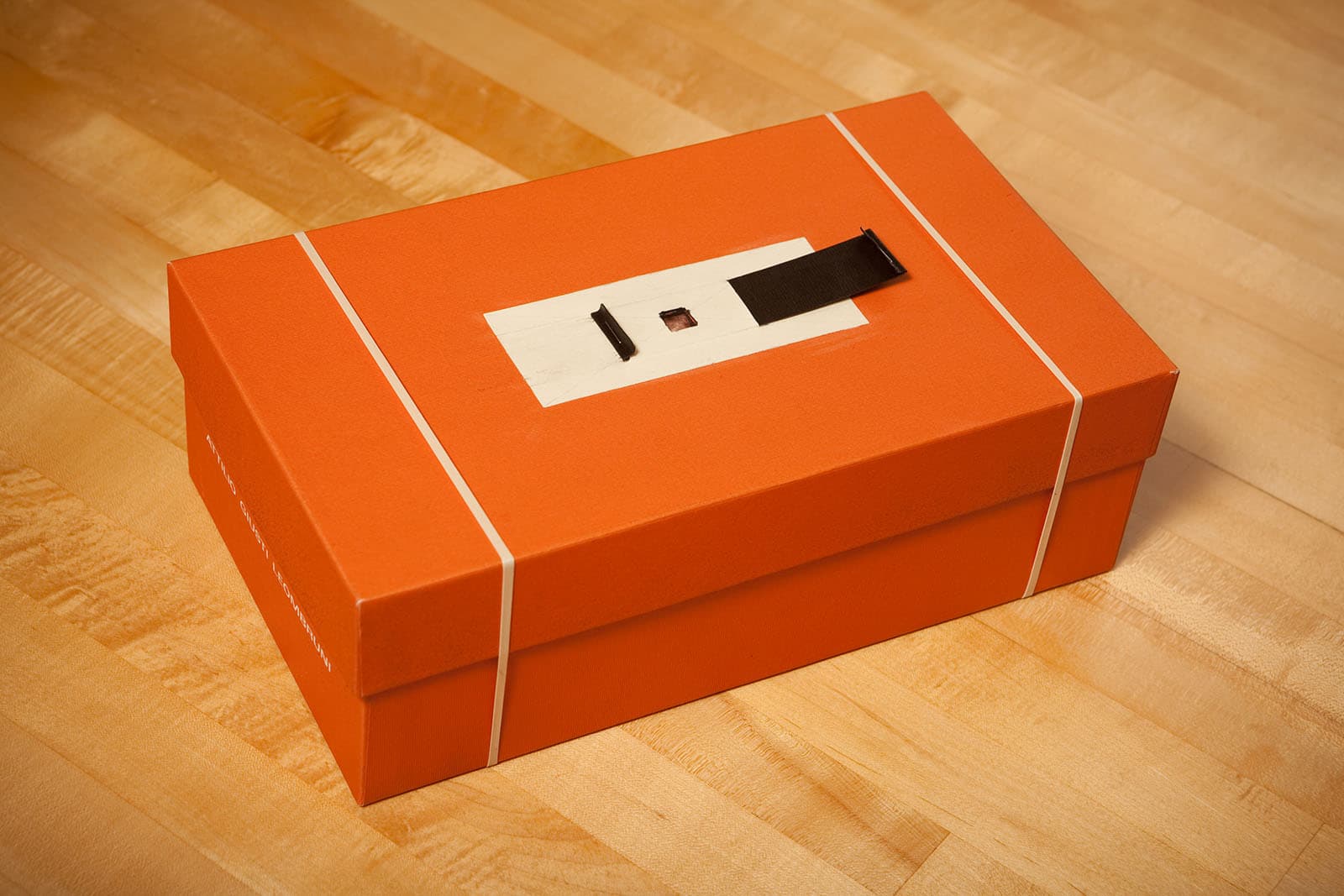
Shoebox Camera Obscura
Turn a shoebox into a working camera with one pinhole and no lens, then find out why a smaller hole gives you a sharper picture and a dimmer one.
Medium · 1 hour
Introduction
Before there were lenses, before there was film, there was a dark room with a small hole in one wall. The picture that lands on the opposite wall is upside down, in full color, and completely real.
A shoebox is a dark room. You need one hole, one piece of tracing paper, and about an hour.
The Why
Light travels in straight lines. A single point on a bright tree outside is throwing rays in every direction, but only the ones aimed at your tiny hole get through, and those carry straight on to land on one spot inside the box. Rays from the top of the tree end up at the bottom of your picture and rays from the bottom end up at the top, which is why the image arrives upside down. This is also what the back of your eye receives, and your brain quietly flips it for you.
Step-by-Step Instructions
- 1
Cut a square hole about 3 cm across in the middle of one end of the box, and a larger viewing window in the opposite end.
- 2
Tape tracing paper tightly across the viewing window. This is your screen, and it has to be flat rather than baggy.
- 3
Paint or line the inside of the box black. Every bit of stray light bouncing around in there washes out the picture.
- 4
Tape a square of foil over the 3 cm hole, then push a pin straight through the center of the foil to make one clean pinhole. Do not wiggle it.
- 5
Seal every seam and corner with black tape, then take the box to a bright window or outside on a sunny day.
- 6
Put the cloth over your head and over the viewing end, and look at the tracing paper while the pinhole faces something bright. Give your eyes a full minute to adjust before you decide it is not working.
- 7
Make a second foil square with a noticeably bigger hole and a third with a smaller one. Swap them in turn and write down what happens to sharpness and to brightness each time.
Pinhole Comparison
One row per hole. Score sharpness and brightness from 1 to 5, always on the same view through the same window.
| Hole | Roughly how wide | Sharpness 1-5 | Brightness 1-5 | What you could make out |
|---|---|---|---|---|
| Row 1, Hole | Row 1, Roughly how wide | Row 1, Sharpness 1-5 | Row 1, Brightness 1-5 | Row 1, What you could make out |
| Row 2, Hole | Row 2, Roughly how wide | Row 2, Sharpness 1-5 | Row 2, Brightness 1-5 | Row 2, What you could make out |
| Row 3, Hole | Row 3, Roughly how wide | Row 3, Sharpness 1-5 | Row 3, Brightness 1-5 | Row 3, What you could make out |
| Row 4, Hole | Row 4, Roughly how wide | Row 4, Sharpness 1-5 | Row 4, Brightness 1-5 | Row 4, What you could make out |
| Row 5, Hole | Row 5, Roughly how wide | Row 5, Sharpness 1-5 | Row 5, Brightness 1-5 | Row 5, What you could make out |
Keep the subject and the light the same for every row. If the sun goes behind a cloud between two rows, the brightness column stops meaning anything.