Light & Optics
Sunset in a Jar
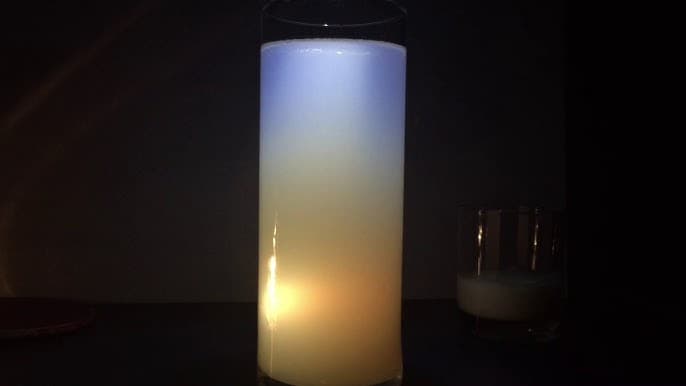
Shine a flashlight through a jar of milky water and watch it look blue from the side and orange from the end, for exactly the reason the sky and the sunset do.
Easy · 45 minutes
Introduction
The sky is not blue because it reflects the ocean, and the sunset is not orange because the sun changes color. They are the same effect seen from two different angles.
You can put that effect in a jar on the kitchen table with a flashlight and a few drops of milk, and look at it from both angles inside the same minute.
The Why
White light is every color at once. When it meets something much smaller than its own wavelength, the short blue waves get knocked sideways far more than the long red ones, roughly sixteen times more, and that sideways-scattered light is what you see through the side of the jar. What is left to come out the far end has had its blue stripped out, so it looks warm and orange. In the sky the scatterers are air molecules, and a sunset is redder than noon because the light is travelling through much more air to reach your eye.
Step-by-Step Instructions
- 1
Fill the jar with water and turn the lights off. Shine the flashlight in through one end and look at the beam from the side. In clear water you will barely see it, because there is almost nothing in there to scatter the light.
- 2
Add two or three drops of milk and stir. Look from the side again. The beam should now be visible, and faintly blue.
- 3
Now look straight down the length of the jar with the flashlight at the far end. Do not look at the flashlight itself, look at the light that has come through the water. It should look warmer than it did going in.
- 4
Add one more drop and check both views again. Write down what happens to each color as you go.
- 5
Keep adding milk one drop at a time until the beam from the side turns white instead of blue. Write down how many drops that took.
- 6
Hold the white paper at the far end and look at the spot the light makes on it. Compare that spot at two drops against the same spot at eight drops.
- 7
Explain in one sentence why noon and sunset are different colors even though the sun itself has not changed at all.
Drop by Drop
One row per amount of milk. Look from the side and from the end before you add the next drop.
| Drops of milk | Color from the side | Color through the end | Notes |
|---|---|---|---|
| Row 1, Drops of milk | Row 1, Color from the side | Row 1, Color through the end | Row 1, Notes |
| Row 2, Drops of milk | Row 2, Color from the side | Row 2, Color through the end | Row 2, Notes |
| Row 3, Drops of milk | Row 3, Color from the side | Row 3, Color through the end | Row 3, Notes |
| Row 4, Drops of milk | Row 4, Color from the side | Row 4, Color through the end | Row 4, Notes |
| Row 5, Drops of milk | Row 5, Color from the side | Row 5, Color through the end | Row 5, Notes |
| Row 6, Drops of milk | Row 6, Color from the side | Row 6, Color through the end | Row 6, Notes |
| Row 7, Drops of milk | Row 7, Color from the side | Row 7, Color through the end | Row 7, Notes |
| Row 8, Drops of milk | Row 8, Color from the side | Row 8, Color through the end | Row 8, Notes |
The row where the side view stops being blue and turns white is the interesting one. Write down what you think changed.