Light & Optics
The Glow Rule
Hunt for things that glow under a UV torch, then find the rule every single one of them obeys: the light coming out always has less energy than the light going in.
Easy · 45 minutes
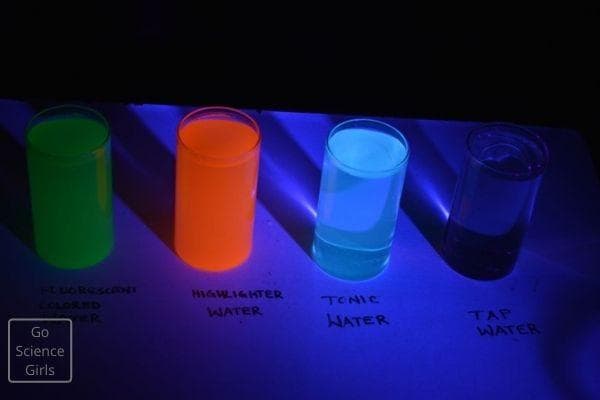
Introduction
Some completely ordinary things are hiding a color. Tonic water, highlighter ink, laundry powder, some white socks, and the security strip in a banknote all look unremarkable until ultraviolet light lands on them.
Finding them is good fun for about ten minutes. The rule underneath is the part worth keeping, and it turns out to be a rule with no exceptions.
The Why
Ultraviolet light is made of photons carrying more energy than any color your eye can see. When one is absorbed by the right kind of molecule, it lifts an electron up to a higher energy level. The electron gives up a little of that energy as heat, then falls back down and emits a photon of its own. Because some energy was lost on the way, the emitted photon always carries less than the one that was absorbed, and less energy means a longer wavelength, which means a redder color. That is why ultraviolet goes in and blue comes out, and why you will never find something that takes in red and gives back blue. The size of that step down even has a name: the Stokes shift.
Step-by-Step Instructions
- 1
Turn out the lights and let your eyes adjust for a couple of minutes. Then sweep the UV torch slowly around a room and write down everything that lights up.
- 2
Pour tonic water into a clear glass and shine the torch through it from the side. Compare it against plain water in an identical glass, so you know it is not the glass doing the glowing.
- 3
Scribble a yellow highlighter heavily onto white paper and put it under the torch. Write down the color that comes out, not the color the ink looks in daylight.
- 4
Sprinkle a little laundry powder onto dark paper and light it up. Detergents have brighteners added on purpose, so that clothes throw back extra blue and look whiter than white.
- 5
Write down the color of the torch itself alongside the color that came out of each thing you found, then compare the two columns and look for anything that broke the pattern.
- 6
Test the glow-in-the-dark stars. Charge them under the torch for ten seconds, then switch the torch off. Unlike everything else on your list, these keep going.
- 7
Time how long the stars stay visible. Then charge them for a full minute and time it again, and write both numbers down.
Glow Log
One row per thing you find. The two color columns are the whole point of the table, so compare them once it is full.
| Object | Color in normal light | Color going in | Color coming out | Still glowing after the torch is off? |
|---|---|---|---|---|
| Row 1, Object | Row 1, Color in normal light | Row 1, Color going in | Row 1, Color coming out | Row 1, Still glowing after the torch is off? |
| Row 2, Object | Row 2, Color in normal light | Row 2, Color going in | Row 2, Color coming out | Row 2, Still glowing after the torch is off? |
| Row 3, Object | Row 3, Color in normal light | Row 3, Color going in | Row 3, Color coming out | Row 3, Still glowing after the torch is off? |
| Row 4, Object | Row 4, Color in normal light | Row 4, Color going in | Row 4, Color coming out | Row 4, Still glowing after the torch is off? |
| Row 5, Object | Row 5, Color in normal light | Row 5, Color going in | Row 5, Color coming out | Row 5, Still glowing after the torch is off? |
| Row 6, Object | Row 6, Color in normal light | Row 6, Color going in | Row 6, Color coming out | Row 6, Still glowing after the torch is off? |
| Row 7, Object | Row 7, Color in normal light | Row 7, Color going in | Row 7, Color coming out | Row 7, Still glowing after the torch is off? |
| Row 8, Object | Row 8, Color in normal light | Row 8, Color going in | Row 8, Color coming out | Row 8, Still glowing after the torch is off? |
| Row 9, Object | Row 9, Color in normal light | Row 9, Color going in | Row 9, Color coming out | Row 9, Still glowing after the torch is off? |
| Row 10, Object | Row 10, Color in normal light | Row 10, Color going in | Row 10, Color coming out | Row 10, Still glowing after the torch is off? |
With the table full, check every row: did the light coming out ever carry more energy, meaning bluer, than the light going in? Write your answer underneath.