Try walking down your school hallway with your eyes shut. You might get four or five steps before you clip a wall, a desk, or somebody's backpack. Moving through space safely turns out to require a constant stream of clues.
Robots are stuck with the same problem, except they start with nothing. A robot does not know where it is. It has to work that out from sensors, cameras, wheel counts, maps, and a lot of math. Gather clues, make your best guess, move, then check the guess again.
Robots Need Senses Too
You have sight, hearing, touch, and balance. A robot has sensors, and each one notices exactly one kind of thing. Some measure distance, some catch objects, some track speed, some figure out which way is which.
- Cameras: to see walls, roads, people, signs, or obstacles
- Wheels: to measure how far the robot has traveled
- GPS: to estimate location outdoors
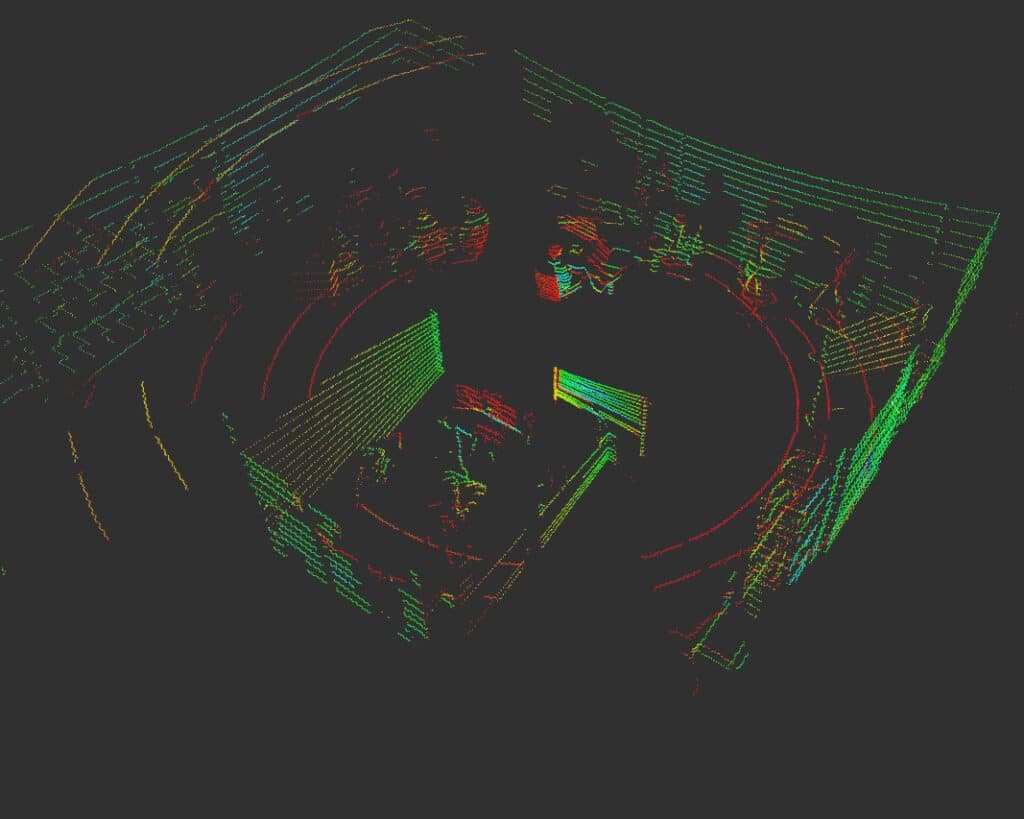
- Lidar: to scan the area with laser light
- Ultrasonic sensors: to bounce sound waves off objects
- Gyroscopes: to sense turning or tilting
No single sensor tells the whole story. The camera spots a doorway. The wheel counter says you have gone five feet. The distance sensor insists there is a wall right there. Stack those together and a position starts to emerge.
Counting Wheel Turns
The simplest trick in the book is counting wheel rotations. Roll out from the classroom door, count ten feet worth of turns, and you can claim you are ten feet from the door. Engineers call it odometry. You do the same thing when you count your steps in the dark.
Using Cameras Like Eyes
Cameras let a robot look around. A vacuum picks out chair legs and baseboards. A self-driving car reads lane lines and traffic lights. A Mars rover studies rocks and dodges ground that would swallow a wheel.
But a camera does not see the way you see. You glance at a chair and you just know. A robot gets a grid of colored pixels and has to work out edges, shapes, shadows, and patterns before it can call it a chair. Then the lights change. Then something sits in front of it. Then someone turns it around and the whole silhouette is different. Every one of those has to be trained for.
Building a Map
Better robots draw as they go. A vacuum starts in an unfamiliar room and slowly figures out where the walls are, where the couch sits, and which paths stay open. Once it has that map, it stops bumping around like a pinball and starts cleaning in efficient lines.
You do the exact same thing in a new building. Day one you are lost. By day three you know the stairs are by the entrance, the gym is down the hall, the library is around that corner. Robots build the same mental map, just with sensors and code instead of memory.
Why Robots Still Get Lost
They get lost constantly. A wheel slips. A sensor spits out garbage. Somebody moves the couch. The lights go out. A bag ends up in front of the camera. Two hallways look identical and the robot picks the wrong one.
So a robot never makes one guess and commits to it. It re-checks, over and over, updating its estimate every time new information shows up. Which is exactly what you do walking through a museum, glancing at signs, checking the map, looking around, adjusting.
The Big Idea
Robots find their position by collecting clues and combining them. Cameras, wheel counts, GPS, lasers, motion sensors. All of it feeds one running estimate of where I am and where I should go next.
Keep Exploring
What Makes a Robot a Robot?