Quick quiz. Toaster: robot? Remote-control car? Vending machine? Smart speaker? Robot vacuum? Most people answer those five differently, which tells you the word is doing a lot of loose work.
Here is the actual line. A robot senses the world, decides something, and then acts on it. That means nearly every robot has three parts: sensors, a controller, and actuators. Or in plain terms, it notices, it thinks, it moves.
Part 1: Sensors Help Robots Notice
A robot cannot react to a world it cannot detect, so first it needs sensors. Each one picks up one kind of signal:
- Light
- Distance
- Sound
- Touch
- Temperature
- Movement
- Direction
- Color
- Pressure
A robot vacuum uses them to find walls, avoid stairs, and notice dirt. A self-driving car uses them to track roads, signs, other cars, and people. A factory arm uses them to confirm the part is actually where it is supposed to be. Strip the sensors out and a robot is a person trying to cross a room with no sight, no hearing, and no touch.
Part 2: Controllers Help Robots Decide
The controller is where decisions happen. Not a brain, exactly. More like the part running the instructions, and those instructions can be almost laughably simple or seriously advanced.
One robot follows a single rule: if the sensor sees a wall, turn left. Another combines a camera feed, a map it built itself, and a pathfinding program to pick the safest route across a cluttered room. Controllers range from a chip the size of a fingernail to a serious processor. Either way, the job is the same. Read the sensors, choose what happens next.
Part 3: Actuators Help Robots Move
Actuators are the parts that actually do something. Motors are the most common kind. They spin wheels, swing arms, turn gears, open grippers, rotate joints.
A factory arm has a motor at every joint. A robot hand might run tiny motors or pull cables like tendons. A drone has four motors spinning propellers just to stay in the air. Take the actuators away and you have a machine that senses everything, decides everything, and does absolutely nothing.
Does a Robot Have to Look Like a Person?
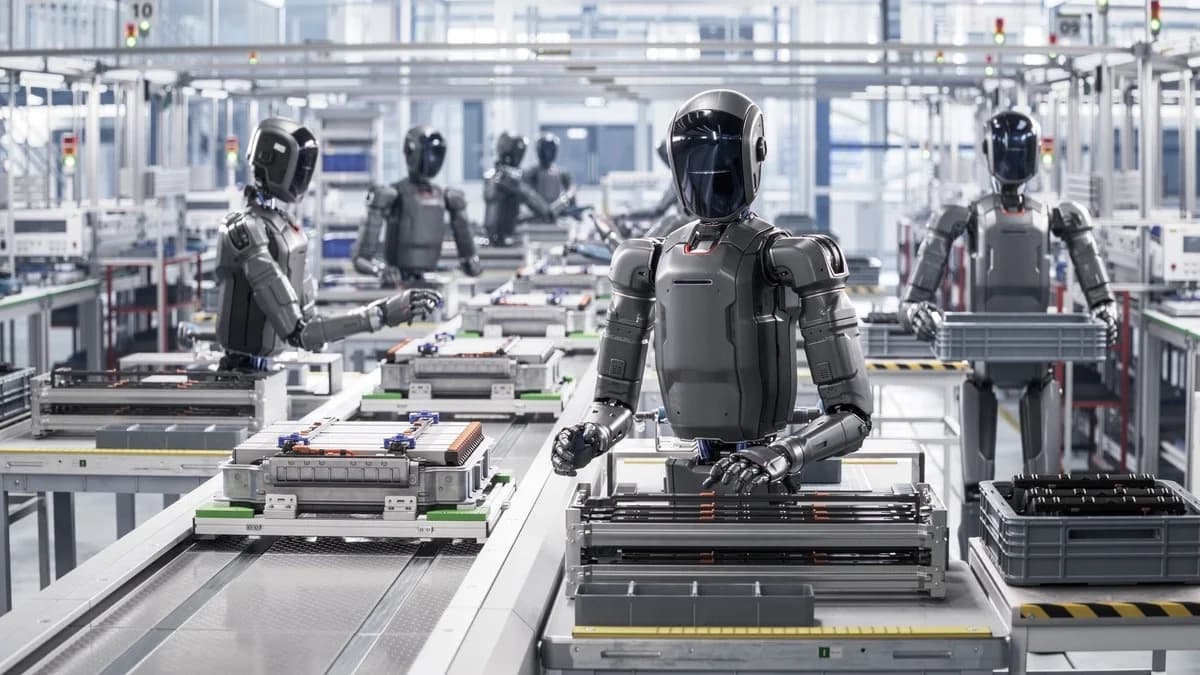
Absolutely not, and this is the myth movies planted in all of us. No face required. No arms, legs, or eyes required. Shape follows the job, always.
- A small vacuum
- A rover
- A mechanical arm
- A drone
- A submarine
- A delivery cart
- A machine inside a factory
Is a Remote-Control Car a Robot?
Usually no, and here is why. You are making every single decision. You steer, it turns. That is a machine obeying you. But give that same car a sensor and let it swerve around an obstacle on its own, and it just crossed the line. Decision-making is the line. A machine that only follows commands is a machine. A robot decides at least a little bit for itself.
The Big Idea
A robot is not just a machine that moves. It gathers information with sensors, works through instructions with a controller, and acts through actuators. No human face required, no voice required. Underneath it all, one loop:
Keep Exploring
How Do Robots Know Where They Are?