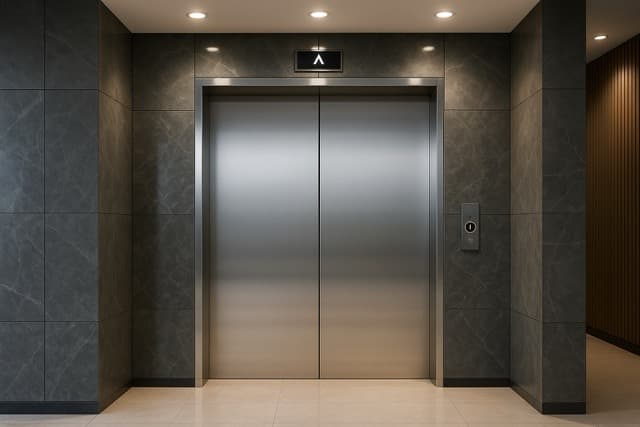
You press a button. The doors slide shut. Something hums. Thirty seconds later you step out on exactly the floor you wanted. It feels like nothing. It is actually a small machine running sensors, motors, cables, counterweights, and a pile of logic, all so nobody has to think about it.
So how does the thing know where you want to go?
The Button Sends a Request
Pressing the button does not control the motor. You are not driving. You are filing a request with the elevator's control system, which is basically its brain, and that brain is already keeping track of:
- Which floor the car is sitting on right now
- Every button anybody has pressed
- Which direction it is already heading
- Whether the doors are open or closed
- Whether something is stuck in the doorway
It never guesses. Every move comes from that list.
Sensors Tell the Elevator Where It Is
An elevator has to know its own position inside the shaft, so sensors track the car the whole way up and down. Those readings tell the system when to start slowing, when to stop, and whether the car is actually level with the floor.
That last one matters more than you would think. A car that stops two inches high turns into a tripping hazard for everyone who walks out. So elevators are built to land within a fraction of an inch.
Motors Do the Heavy Lifting
An electric motor spins a pulley, the pulley pulls the cables, and the cables pull the car. Straightforward enough. But here is the clever bit: most elevators also hang a counterweight on the other end. Car goes up, counterweight goes down. Car goes down, counterweight goes up.
That balance means the motor is not fighting the full weight of a loaded car. It is more like a seesaw than a crane, and it saves an enormous amount of energy.
The Elevator Uses Simple Logic
Say the car is on floor 1 and people hit buttons for 3, 5, and 2. It does not handle them in the order they arrived. It heads up and grabs 2, then 3, then 5, sweeping in one direction. No wasted trips, nobody waiting forever.
In really tall buildings this gets much smarter. Some systems ask where you are going before you board, then group people by destination so each car makes fewer stops.
Safety Comes First
Elevators are stacked with safety systems. Door sensors stop them from closing on your arm. Brakes clamp the car if it moves when it should not. Backup systems take over when a part fails. Engineers spent a long time imagining everything that could go wrong so you never have to.
Try This: Elevator Logic Game
Your turn to be the controller. Draw a 6-floor building and put the car on floor 2. Someone on floor 5 wants to go down. Someone on floor 1 wants to go up. Someone already inside pressed 4. What order do you run them in?
No Single Right Answer
Final Thought
An elevator does not know anything the way you know things. It reads sensors, runs logic, and turns motors. Next time you ride one, remember there is a whole engineered system working quietly inside the walls, and all you had to do was press a button.