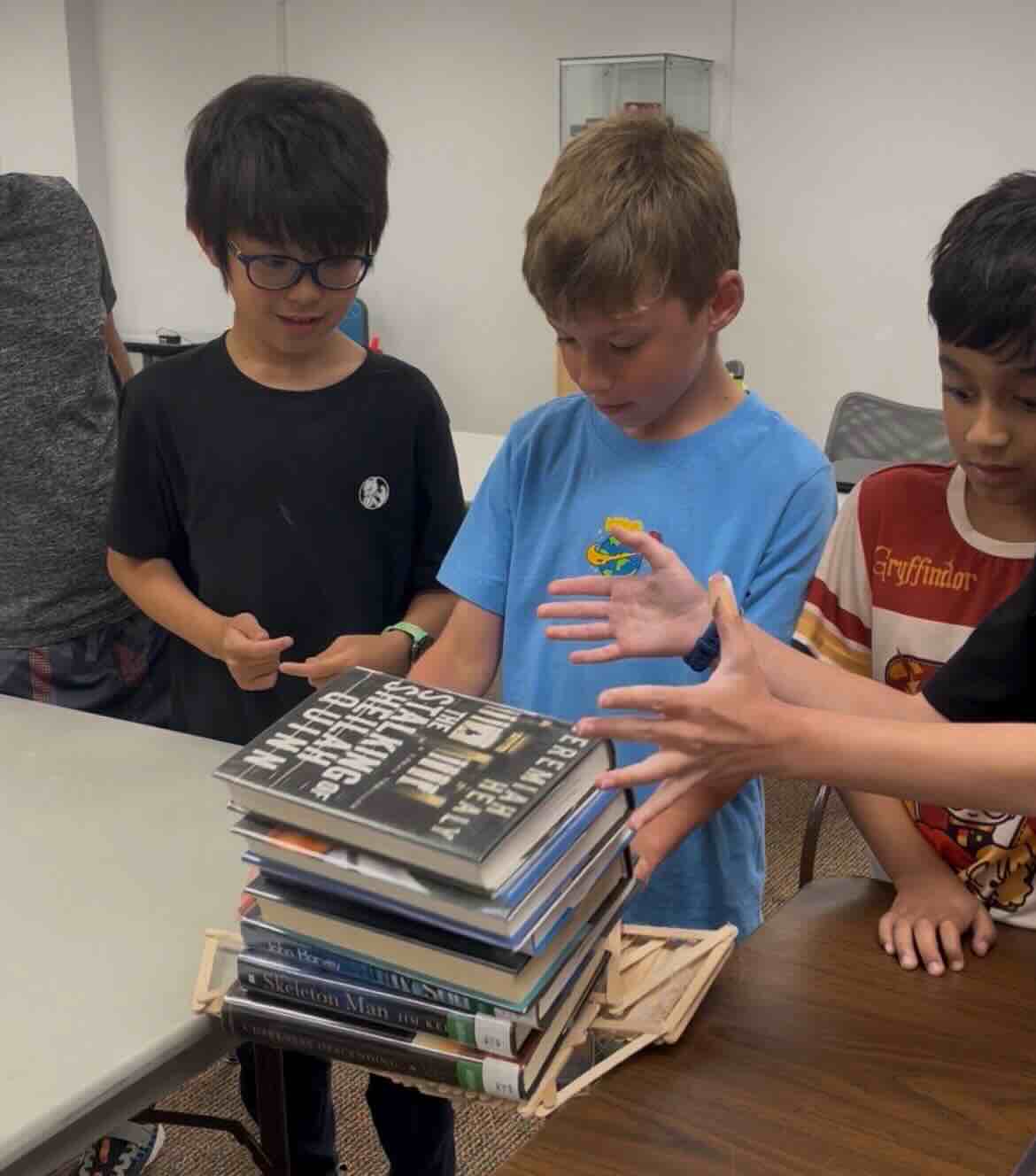
Something breaks at almost every workshop we run. A bridge folds under the books. A tower drops the second one more block goes on. A cardboard rover tips over on its first roll. And here is the interesting part: the student who built it usually knows what went wrong before anyone says a word.
That flash of recognition, the "oh, it snapped right at the joint because I rushed the glue," is the best thing that happens all session. Nothing failed. You just got handed information.
The First Question an Engineer Asks
When something breaks, an engineer does not ask "what did I do wrong?" They ask a much better question: where did it break, and what is that telling me?
A bridge that snaps in the middle just told you the middle was weakest. A joint that pulls apart just told you the connection could not take it. The break is basically leaving you notes for the next build.
Engineering Framing
The Improve Loop
Engineers run in circles on purpose. The design loop is not a straight shot from idea to success. It goes like this:
- 1
Define the goal
Get specific. Hold 5 pounds? Span 30 centimeters? Weigh as little as humanly possible? Vague goals give you vague results.
- 2
Build a first version
Do not chase perfect. Chase testable. You want something you can put weight on in the next ten minutes.
- 3
Test it for real
Put the actual load on it. Guessing how it would probably do is not a test.
- 4
Watch what failed
Not just that it broke, but exactly where and how. That detail is your data.
- 5
Change one thing
Change three things at once and you will never know which one saved you.
- 6
Test again
Go again. Every round hands you more than the round before it.
What This Looks Like at Avanza STEM Workshops
In a bridge session, most groups build once and test once. That is still plenty. When the bridge starts to bend, then twist, then finally give out, everyone in the room can see which part was carrying the most.
The real moment comes after. Where did it fail? Why that spot? If you built a second one tomorrow, what gets reinforced first?
The One Change Rule
This one matters more than students expect. After something breaks, change exactly one thing before you test again.
Say your bridge breaks and you rebuild it with better joints AND a new truss shape AND extra bracing. Maybe it holds more. So what? You have no idea which change did it, so you cannot use any of it next time. You did not learn. You got lucky.
This Thinking Works Everywhere
None of this is only about structures. Observe, guess, test, improve. The same loop shows up all over your life:
- Science: an experiment that flops is telling you something specific about your setup or your hypothesis
- Coding: a crash hands you an error message. Read it before you touch a single line
- Math: a wrong answer points at the step to go back to. It is not a verdict on you
- Sports: a missed shot is feedback on your stance or your timing, not a reason to quit
Join a Free Engineering Workshop
At our engineering workshops, students build something, break it on purpose, and use what they see to make the next one better.
See upcoming workshops