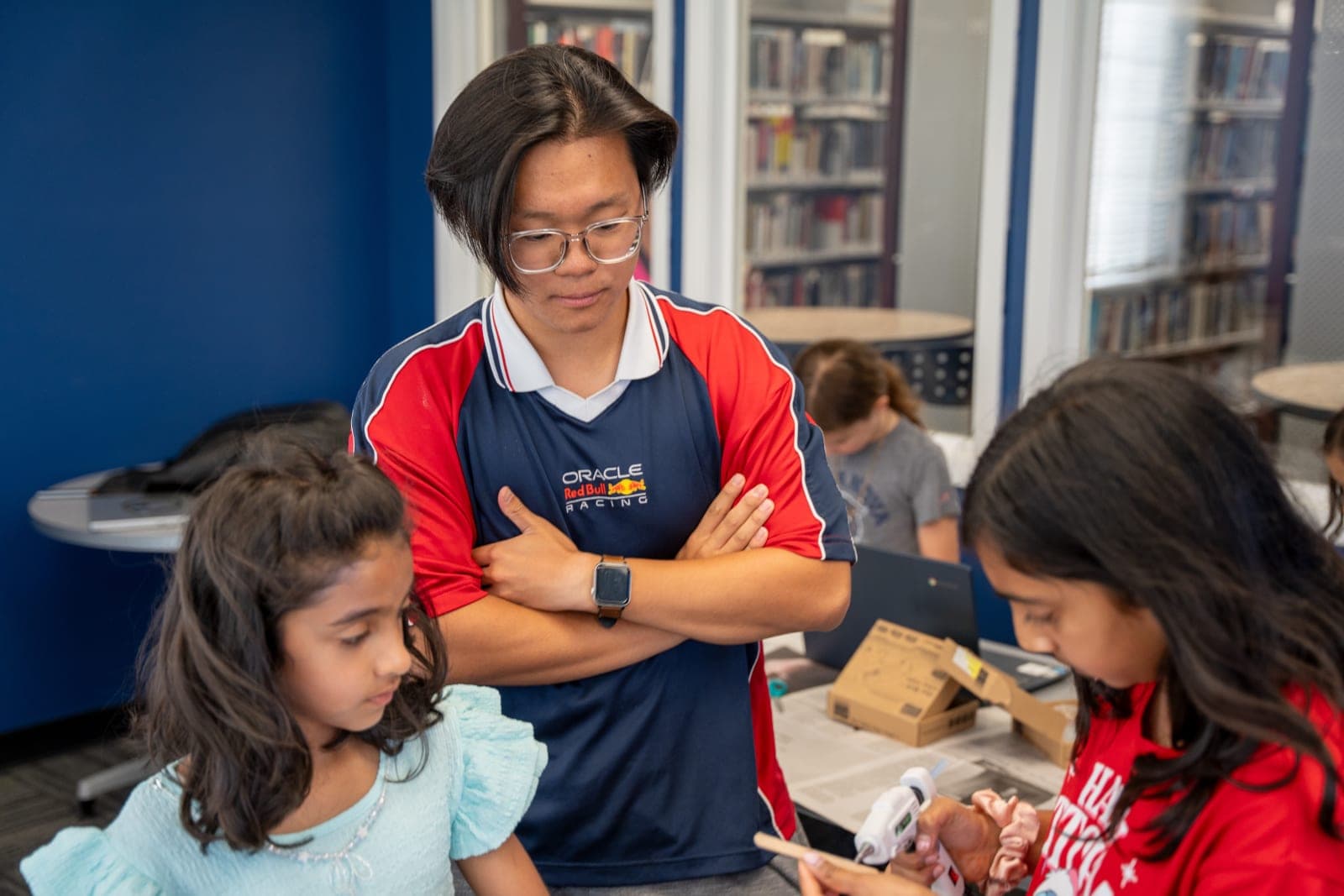
If students are sitting still watching an adult demonstrate something, that is not a STEM workshop. That is a presentation. And presentations, even the good ones, are basically gone by breakfast the next day.
So we put as much work into designing the session as we do into the content. What kids do in that room beats anything we could say at them.
The Difference Between Active and Passive
Passive learning is watching, listening, receiving. Active learning is building, testing, arguing, breaking something and fixing it. The research on which one sticks is not exactly a close call.
But keeping hands busy is not the same as thinking. A kid can glue popsicle sticks for thirty minutes on autopilot. The trick is designing the activity so the doing forces the thinking.
How We Design Avanza STEM Activities
Before any activity makes it into a session, it has to survive four questions.
- 1
Is there a real test?
If students cannot find out whether their idea worked, it is not a design challenge, it is an art project. Every activity ends with a verdict. Does the bridge hold? Does the rover make it across? Does the code run?
- 2
Can it fail in an interesting way?
Useful failure is a feature, not a bug. If something either works or falls apart for no clear reason, there is nothing to iterate on. The best failures are specific enough that a student knows exactly what to fix.
- 3
Is there more than one way in?
A challenge with one right answer becomes a race. A challenge with several good approaches lets students make real decisions and then compare results with the table next to them.
- 4
Are they talking to each other?
Two students going back and forth about whether to add another diagonal or reinforce the joint are not off task. They are doing engineering.
What Students Actually Do at Our Workshops
In one 60-minute session, a student usually moves through five or six different things:
- Hear a two-minute prompt with the goal and the constraints, and nothing else
- Argue with a partner about the design before touching a single material
- Build version one and test it, usually watching it fail
- Make one specific change based on what they just saw
- Test again and find out whether that change actually helped
- Tell the group what they learned. Not what they built. What they found out
That last step is the one almost every workshop skips. The second a student has to put it into words, they discover whether they understood it or just got lucky.
Why Noise Is Usually a Good Sign
A quiet room makes adults comfortable. It usually means the students checked out. When kids are talking over each other, even arguing, that room is thinking.
“I thought they were getting off track because they were so loud about the zipper thing. But then I listened and they were actually debating whether friction was higher on the outside or inside of the curve. That is exactly what we wanted.”
In that moment, a mentor's job is not to quiet anybody down. It is to drop in one question that makes the argument sharper.
The Three Things We Always Include
- 1
A real test with a real result
Not "great job everyone." An actual pass or fail against the goal we said out loud at the start.
- 2
A specific way to fail
If everything works on the first try, nobody found out where the limits were.
- 3
Time to say what they figured out
Building with no reflection is just activity. The reflection is where it locks in.
Come See a Workshop
Our workshops are free, hands-on, and open to anybody. You can walk in having never built a thing in your life.
See upcoming workshops