
Stand near the top of a skyscraper on a windy day and you might feel the floor shift under you. Just slightly. Your brain will immediately tell you something is wrong. Your brain is wrong. That movement is the design working, and a building that can sway a little is usually safer than one that refuses to budge.
Wind Pushes on Buildings
Wind feels like nothing when it goes past your face. Hit a 60-story wall of glass with it and it becomes a serious force. The taller you build, the more of that force you catch. So engineers have to answer some uncomfortable questions before anybody pours concrete: how hard does the wind get here, how tall are we going, what shape catches the least, how much will it move, and will people inside feel sick.
A skyscraper is not just holding itself up. It is in a permanent fight with moving air.
Flexible Can Be Safer
Bend a dry stick and it snaps clean. Bend a living branch and it just goes with you. Buildings work the same way. Make one too stiff and a hard wind or a shaking ground has nowhere to send that energy, so it builds up inside the structure until something gives.
A building that can flex soaks up some of that energy and spreads the rest around. Bending is not weakness here. It is the plan.
Earthquakes Shake Buildings Too
Wind shoves a building sideways from the outside. An earthquake attacks from underneath. The ground moves, so the bottom of the building moves with it, and everything above has to figure out what to do about that.
Engineers fight back with strong frames, flexible joints, shock absorbers, and foundations built to slide or isolate. The goal is almost never to keep the building perfectly still. The goal is to keep it standing and keep everyone inside alive.
Some Buildings Have Giant Dampers
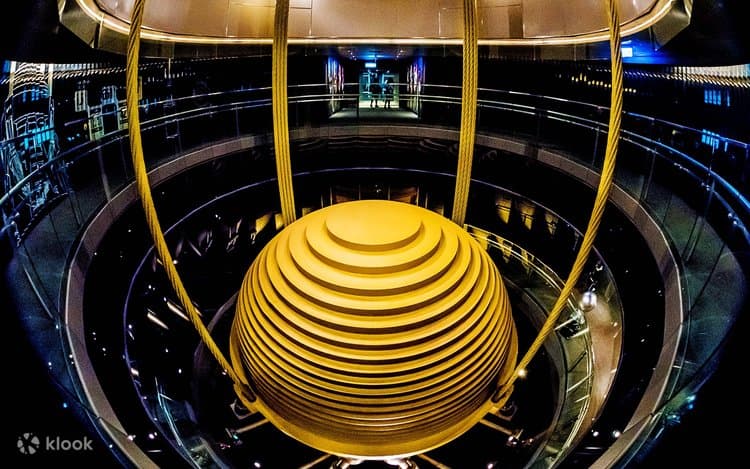
Some skyscrapers hide an enormous weight near the top called a tuned mass damper. Picture a pendulum the size of a room. When the building leans one direction, the damper swings the other way and cancels out the motion.
Shape Matters Too
How a building is shaped changes how wind travels around it. Sharp corners, flat faces, tall skinny profiles: each one handles air differently. So engineers build scale models and stick them in wind tunnels to watch what the air actually does.
Then they tweak. Round off the corners, cut openings through the tower, twist the whole profile. When a skyscraper looks strange, that shape is usually doing a job.
Try This: Paper Tower Test
Build two paper towers. Make one rigid and straight, make the other a little loose and springy. Now blow on them, or bump the table. Which one goes down first? Which one bends way over and comes back?
What Engineers Study
Final Thought
Buildings sway because wind and earthquakes push on them, and a little movement is how a structure survives that push. So when a skyscraper leans a few inches in a storm, nobody messed up. Somebody did their job right.