A chair has exactly one job. Hold you up. And yet chairs break constantly. Legs snap, backs crack, screws work themselves loose, seats slowly sag into a hammock. So why does one chair survive a decade of abuse while another gives out in a year? Engineering, all the way down.
Chairs Must Handle Forces
Sit down and your weight pushes straight into the seat. That force has to travel out through the frame, down the legs, and into the floor. Spread it out nicely and the chair shrugs. Funnel it all into one weak junction and something is going to crack.
That is weight distribution, and it is the whole game. A good chair does not just hold weight. It moves weight safely from you to the ground.
Materials Matter
Wood, plastic, metal, fabric, or some mix of all four. Every one has a way it fails. Wood is strong until the grain runs the wrong direction and it splits. Plastic is light and cheap until it gets thin and cracks. Metal is tough until it is too thin, and then it just folds.
Designers pick based on cost, strength, comfort, weight, and how it looks in a catalog. The best chairs use the right material in each specific spot. Nobody wins by making everything out of the strongest thing available.
Joints Are Often the Weakest Part
Chairs almost never snap in the middle of a solid piece of wood. They come apart where two pieces meet. Those connection points are joints, and a leg might attach to a seat with screws, glue, bolts, brackets, or a shape carved to slot together.
Weak joints, weak chair. That is why a wobble is a warning. Wobbling means something is moving that was never supposed to move, and it is only going to get worse.
Shape Can Make a Chair Stronger
Flip a sturdy chair over and you will probably find bars running between the legs. Those stretchers stop the legs from splaying outward under load. Other designs get there with curved plastic shells, welded frames, or straight-up triangles.
Testing Matters
Before a chair ever hits a store, machines abuse it. They pile on weight, rock it back, drop it, and sit on it thousands of times in a row. Because real life is worse than any lab. People lean back on two legs, twist sideways, flop down hard, drag chairs across tile, and stack them six high.
Holding once is easy. Holding for the ten thousandth time is the actual challenge.
Try This: Paper Chair Challenge
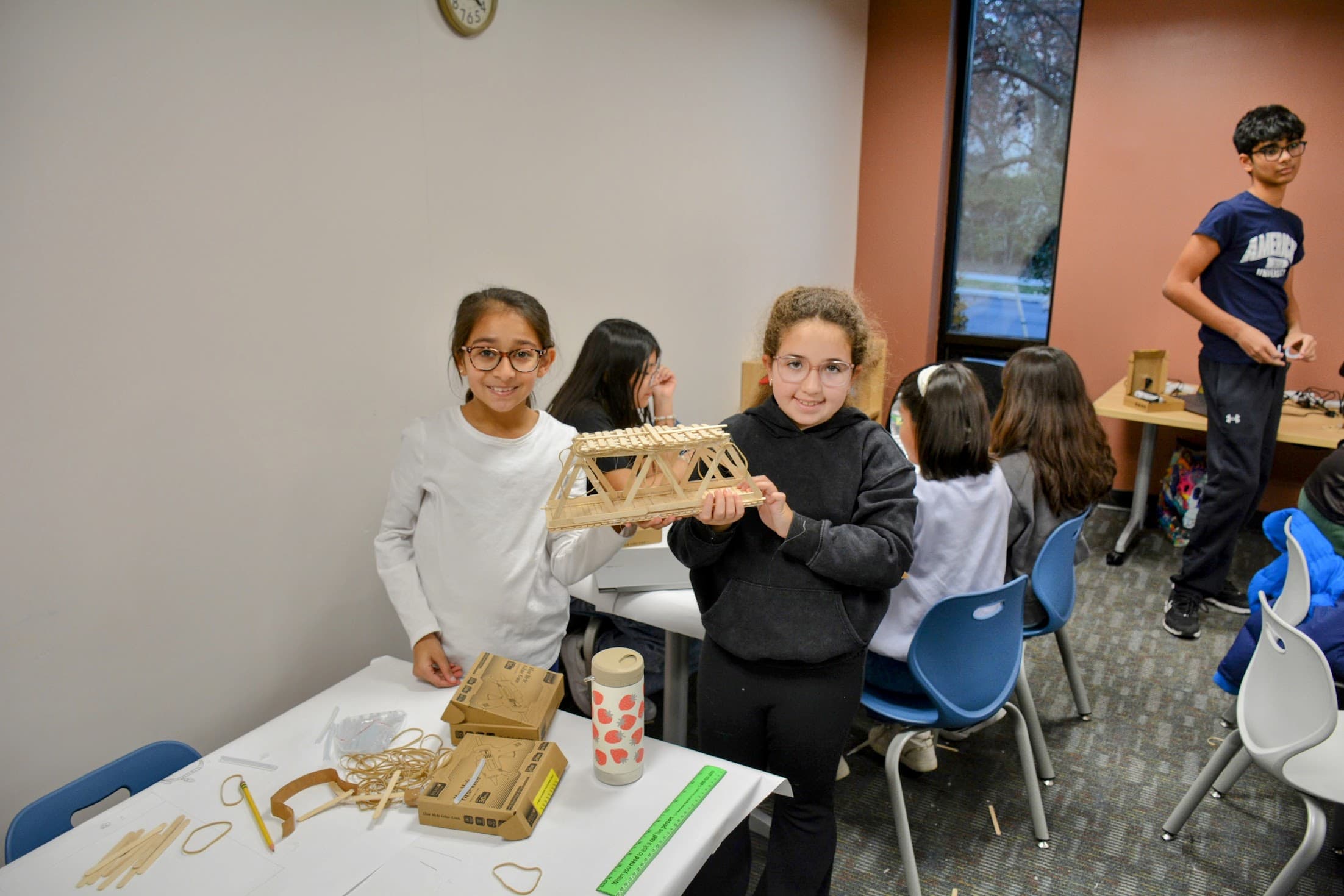
Build a chair out of paper and tape that can hold something real, like a book or a toy. Then build three more. Straight legs, folded legs, triangle bracing, rolled paper tubes. Load them one at a time and see which one refuses to quit.
What You Will Find
Final Thought
Chairs break when the forces have nowhere good to go. They last when somebody picked smart materials, a smart shape, and joints that hold. It looks like ordinary furniture, but every time it takes your weight, that chair is doing engineering.