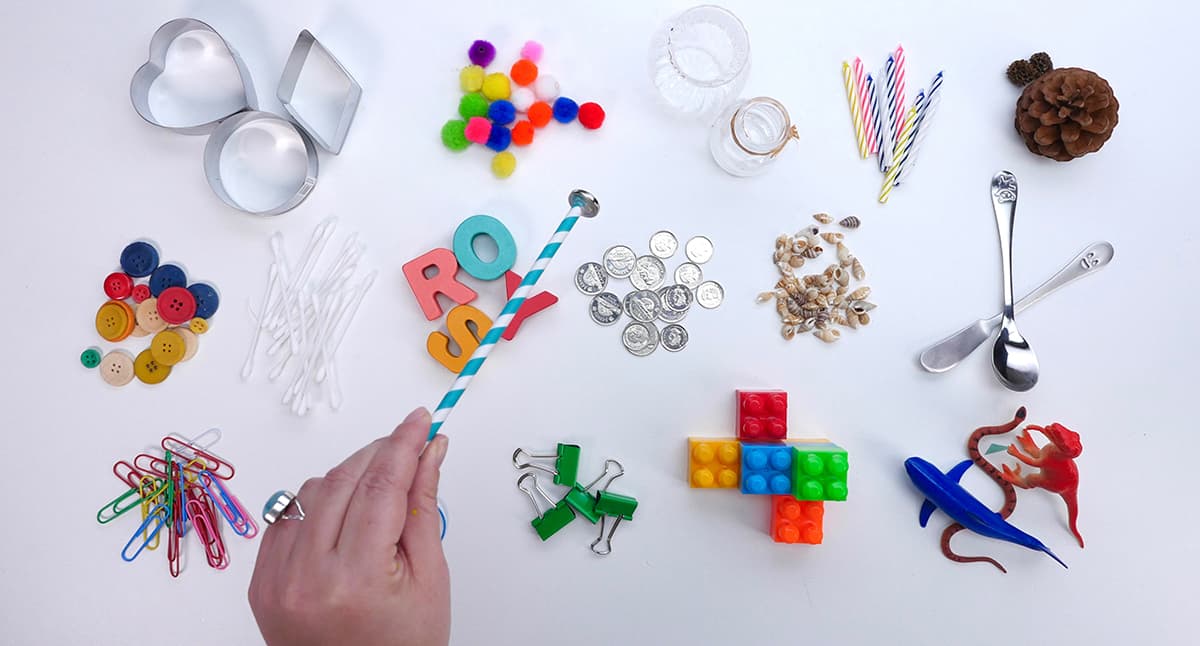
Magnets seem like they have one simple rule. Stick to fridge, grab paper clips, snap onto metal. Easy. Then you try one on aluminum foil, or a penny, or a soda can, and absolutely nothing happens. All of those are metal. So what gives?
The answer is happening way down at the level of the particles inside the material.
Magnets Have Invisible Fields
Every magnet is surrounded by a field you cannot see but can absolutely feel. Bring one near a paper clip and the clip jumps. Bring one near another magnet and you can feel the invisible push before anything touches. That field is strongest at the ends, the poles, which we call north and south.
Opposites attract, matching poles shove each other away. Flip one magnet around and the same two objects go from grabbing each other to fighting. Same magnets, opposite behavior, and nothing changed but the direction.
Not All Metals Are Magnetic
The big misconception is that metal means magnetic. It does not. Iron is strongly magnetic. Steel usually is, because steel is mostly iron. Nickel and cobalt make the list too. But aluminum, copper, gold, silver, and brass? A fridge magnet will not care about any of them. They are perfectly good metals that simply do not do this particular trick.
Tiny Magnetic Regions
Inside a magnetic material there are microscopic zones called domains. Picture each one as a tiny arrow pointing some magnetic direction. In a plain unmagnetized chunk of iron, those arrows are pointing every which way, so all their little pulls cancel each other out and the iron does nothing.
Bring a magnet close and the arrows start swinging into alignment. Get enough of them pointing the same direction and the whole piece of metal becomes attracted. That is what is happening when a paper clip snaps to a magnet. You did not add magnetism. You organized what was already in there.
Why Doesn't Copper Stick?
Copper has electrons doing their thing just like iron does. What it does not have is a structure that lets all those tiny magnetic effects line up and add together. Without that alignment, there is nothing for the magnet to grab. Aluminum, gold, and most other metals are in the same boat. The ingredients are there. The arrangement is not.
What About Steel?
Steel is iron with other elements mixed in, usually carbon. Iron content means most steel is magnetic. But not all of it, and this trips people up. Certain stainless steels barely respond to a magnet at all, because the way their atoms are arranged internally is different. That is why a magnet slaps onto one steel thing and slides right off another that looks identical.
Magnets Are Useful Because They Are Selective
The picky behavior is exactly what makes magnets useful. Recycling plants run giant magnets over the conveyor to yank iron and steel out of a mixed stream in one pass. Electric motors turn magnetism into motion. Speakers turn electrical signals into sound with a magnet and a coil. A compass reads the magnetic field of the entire planet. This is not a fridge trick. It is load-bearing technology.
The Big Idea
Magnets stick to metals whose internal domains can line up with a magnetic field. Iron, steel, nickel, and cobalt can do it. Copper and aluminum cannot, because their structure does not allow that alignment.