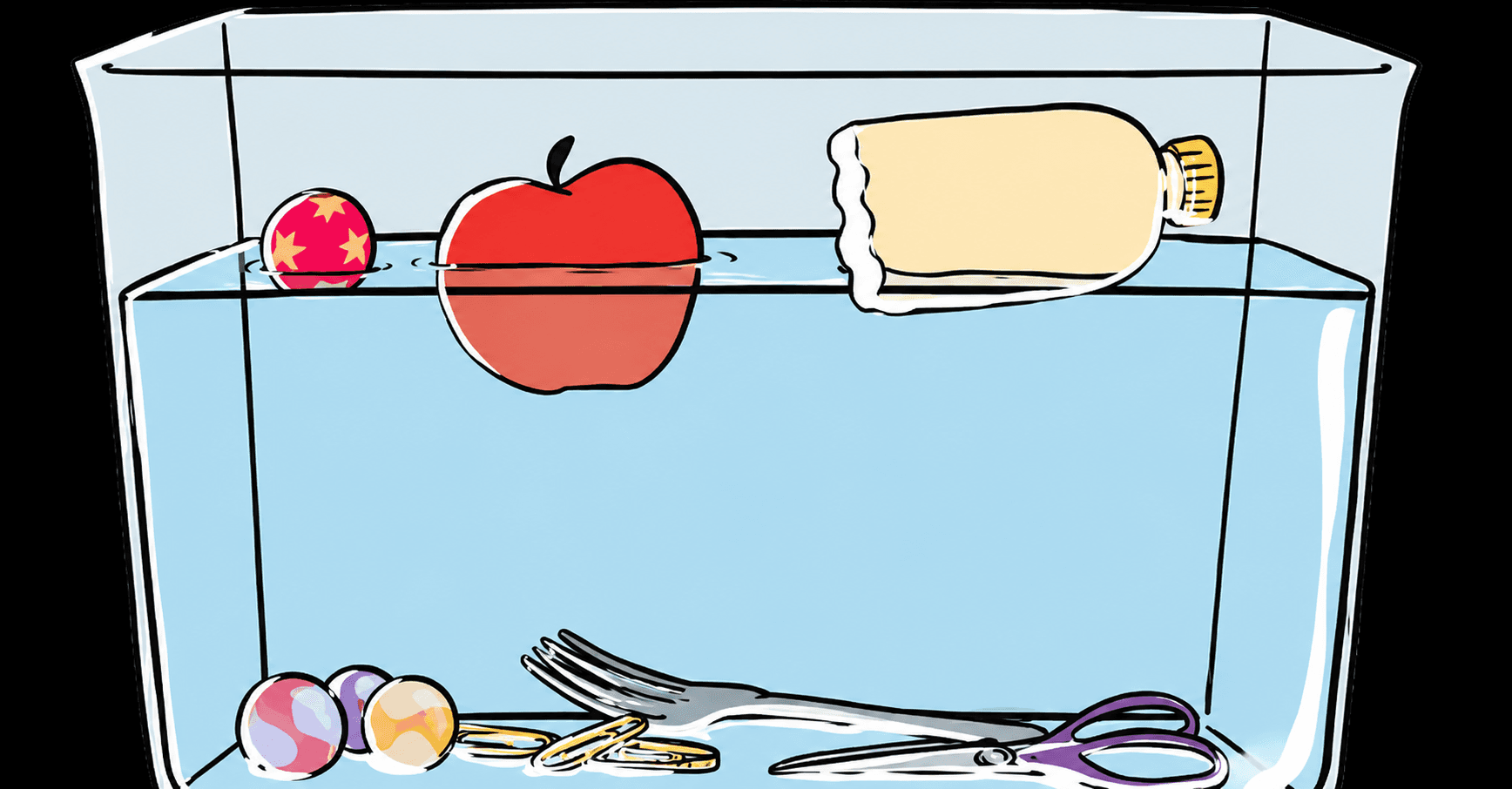
Toss a rock in a lake and it is gone. Toss in a beach ball and it bobs right back. Fine, makes sense. Now explain the 200,000-ton steel cargo ship sitting on top of the same water. Steel does not float. Except apparently it does.
The word for what is going on here is buoyancy, and once it clicks the ship stops being weird.
Water Pushes Up
Water is not a passive thing you drop stuff into. It pushes back. Put anything in water and the water shoves upward on it, and that shove has a name: buoyant force. Meanwhile gravity is pulling down. Whichever one wins decides everything. Buoyant force big enough to match the weight? It floats. Gravity wins? Down it goes.
Objects Push Water Out of the Way
Here is where it gets interesting. Anything you put in water has to shove water aside to make room for itself. That shoving-aside is called displacement, and the more water you displace, the harder the water pushes back up. Which means shape is not a detail. Shape is the whole game.
Density Is a Big Clue
Density is how much stuff is crammed into a given space. A rock is dense: tons of matter squeezed into a small volume. A foam ball is not: mostly air with a little plastic holding it together. Denser than water, you generally sink. Less dense, you generally float. Generally. Shape can flip the whole thing.
Why Can a Steel Ship Float?
Steel is way denser than water, and a solid steel ball drops like the rock. But a ship is not solid steel. It is a thin steel shell wrapped around an enormous volume of air, and that shape displaces a staggering amount of water.
Count the air, and the ship's average density comes out lower than water. That is the loophole, and it is why it floats. Punch a hole in the hull and water replaces the air. Average density climbs past water. And then the ship goes down, exactly the way the rock did.
Why Do Boats Have Wide Bottoms?
Because wide means more water displaced, and more water displaced means a bigger push upward. A canoe, a cargo ship, and a cruise liner look nothing alike, but every one of those hulls was shaped around the same buoyancy math. Anybody designing something that floats is juggling weight, shape, balance, and materials at the same time.
The Big Idea
Things float when the water pushing up can match the weight pulling down. Density gets you partway there. Shape decides the rest.