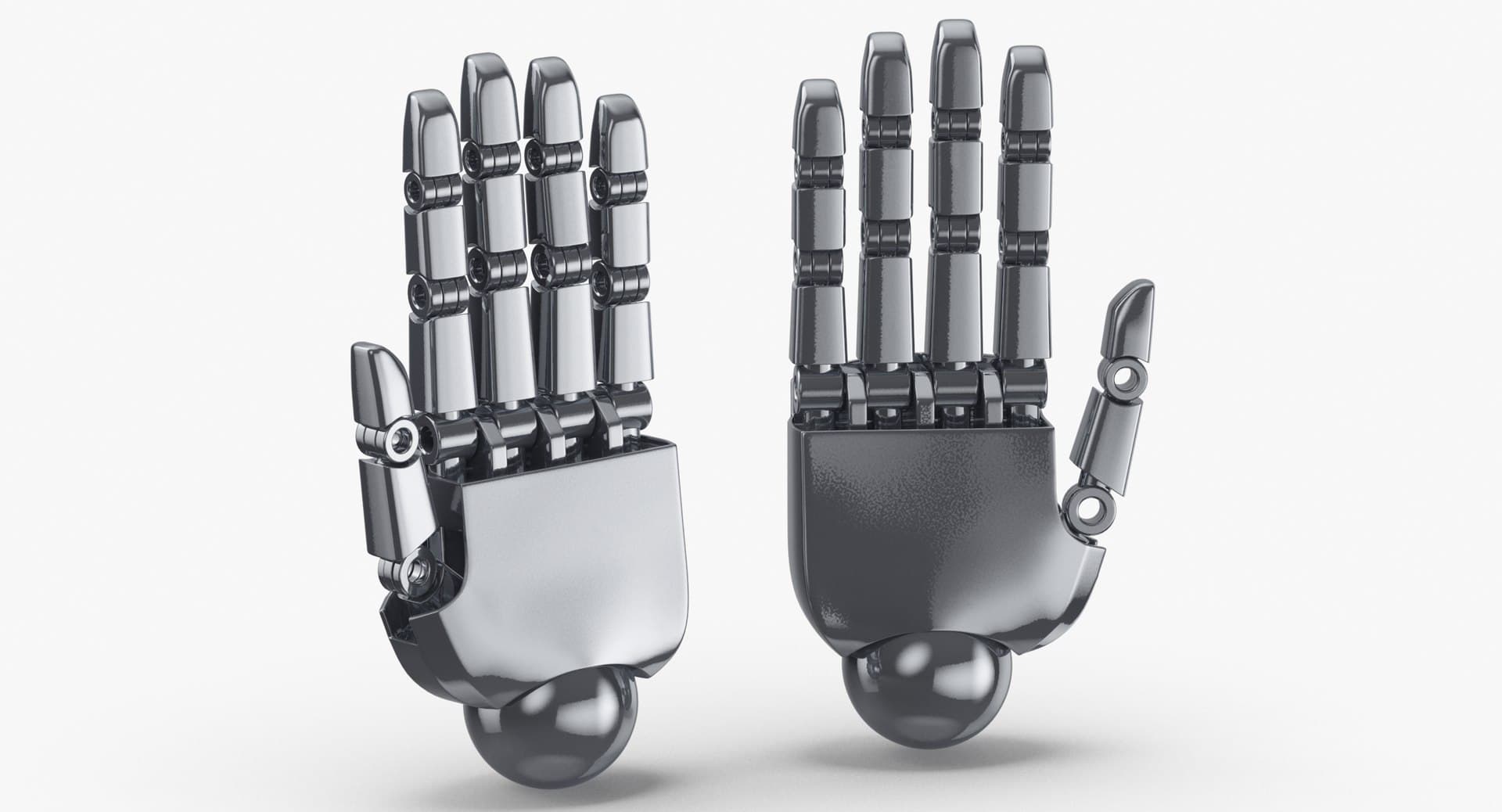
Stop and look at your hand. Open it. Close it. Touch your thumb to each fingertip in order. Pick up a pencil, tap the table, then hold something like it might break. You just ran through moves that entire research labs are still trying to copy.
Hands are one of the hardest things in engineering. Robot hands look impressive in videos, and getting them to actually work like yours is brutally hard. A hand is not a grabber. It is flexible, sensitive, strong, gentle, and wired straight into a very good brain.
Fingers Are Complicated
Your hand is packed with moving parts. Every finger has multiple joints. Your thumb swings in a direction the others cannot, which is the entire reason you can pinch anything. Your wrist rotates, bends, and adjusts to feed all of it the right angle.
To copy that, a robot hand needs joints, motors, gears, cables, materials that bend the right way, and a control system to run all of it together. Getting one finger to move smoothly is already a project. Getting five to cooperate is a different level entirely.
Grip Strength Is Tricky
You never decide how hard to squeeze. It happens. A potato chip gets almost nothing. A loaded backpack strap gets a fist. A pencil lands somewhere in the middle, and you got there without a single thought.
A robot has to calculate it. Squeeze too hard and it crushes what it grabbed. Squeeze too soft and the thing slides out. Grab the wrong part and it twists loose halfway up. And every object is a different problem, because a smooth glass, a fuzzy tennis ball, a wet sponge, and a metal spoon all behave differently in the same gripper.
Touch Matters
Your hand is wallpapered in sensors. Pressure, texture, temperature, slipping, pain. When a cup starts to slide, you feel it and tighten up before you have consciously noticed anything is happening.
Robot hands need that feedback too, and faking human touch is extremely hard. The robot needs to know whether it is touching the object, how hard it is pressing, whether the thing is sliding, whether it is soft or rigid, and whether it is about to snap it in half. Without that, the hand is guessing. Guessing means dropped and broken things.
Human Hands Are Good at Weird Objects
Think about the range. A coin, a sandwich, a water bottle, a shoelace, a basketball, a crumpled ball of paper. Not one of those is like the others. Some are tiny, some are huge, some are slippery, some literally change shape the instant you touch them. Your hand handles all of it without complaint.
Robot hands love predictability. Give one a single part to pick up in a factory and it will do that better than any human, forever. Ask for a hand that can grab almost anything you hand it? That is still an open problem.
Robot Hands Do Not Always Need to Look Human
Here is the twist: the best robot hand often looks nothing like a hand. Some are two-finger pincers. Some are suction cups. Some are soft rubber tentacles that wrap around whatever they touch. Some are just a magnet, because the parts are steel and a magnet works great.
The Big Idea
Robot hands are hard because grabbing is hard. A useful one needs movement, strength, gentleness, touch feedback, precise control, and the ability to deal with objects that are floppy, slick, tiny, or shaped like nothing in particular.
Your hands are so good at this that you have completely stopped noticing. Every shoe you tie, every bag you rip open, every ball you catch out of the air is a move engineers are still chasing. That is what makes this one of the most interesting problems in robotics.
Keep Exploring
How Factory Robots Build Cars