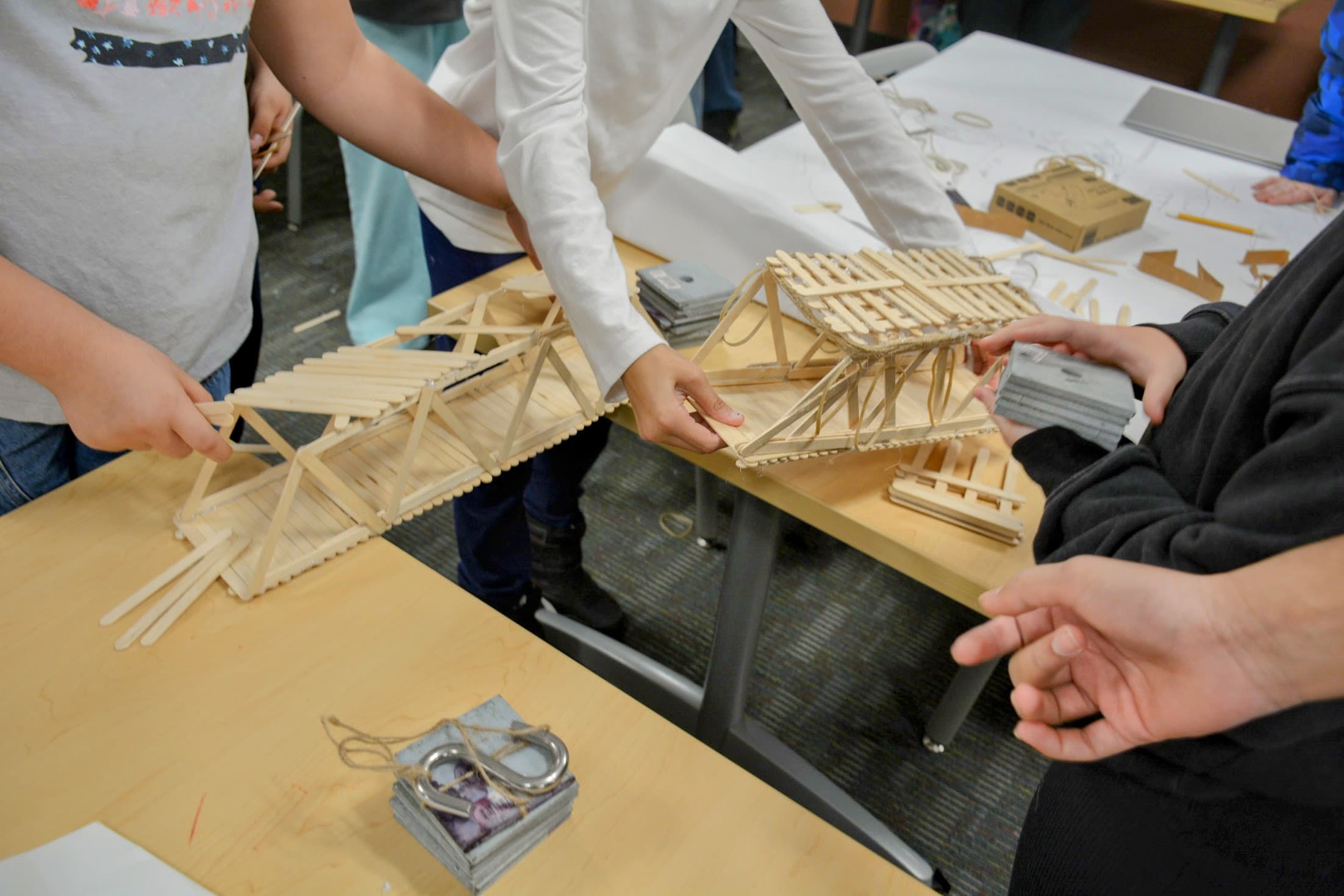
Bridges fall at almost every engineering workshop we run. And the kids who built them almost always wear the same expression afterward. Not crushed. Thinking.
That face is what iteration looks like from the inside. Even when there is no time left to rebuild, the test rewires how a student sees their own design.
The Myth of the Finished Design
There is this idea that good designs come from a smart person thinking very hard before they touch anything. Engineering does not work like that. Neither does writing, or music, or basically anything else worth doing.
Designs get better by crashing into reality. You cannot think your way to a stronger bridge from a chair. You build one, you load it up, you watch what breaks, and then you know something you did not know before.
The Core Idea
A Real Workshop Example
At a bridge session at Clifton Public Library, one group finished their popsicle stick bridge, started stacking books on it, and watched one whole side twist before the thing finally let go.
- 1
The first clue: it twisted sideways
Before anything snapped, they noticed one side leaning further than the other. That was the tell. The problem was not just too much weight. The support was uneven.
- 2
The weak point: no diagonal bracing
Their side trusses were long open rectangles instead of triangles. Pile on enough weight and those rectangles just change shape, and the whole bridge goes soft.
- 3
The quick fix: one targeted reinforcement
With the minutes they had left, they braced the weaker side diagonally and talked through where the matching braces would go on version two.
- 4
The takeaway: the test handed them a better design
They never rebuilt the whole bridge, and they did not need to. One honest test told them exactly what the next one has to survive.
“It failed right where we didn't add reinforcement hot glue”
Why Starting Over Is Not Starting from Scratch
Changing something after a test is not starting over. You are carrying forward information your first design never had access to.
This is the thing about experienced engineers. They are not necessarily better on the first attempt. They are just much better at reading what the first attempt is telling them.
The One Improvement Rule
When something fails and you have time to fix it, change exactly one thing before you test again. Sounds easy. It is not, because every instinct in your body wants to fix all of it at once.
Change three things and the next version holds more? Great, but which change did it? You have no idea. You got lucky, and luck does not carry over to the next build.
- Pick the change that goes after the exact thing that failed
- Make that one change if the clock allows it
- Test again the same way, so the comparison actually means something
- Write down what happened, or what you want to try next
- Let that note drive the next design
Build Something and Test It
At our engineering workshops, students build a structure, load it until it fails, and work out what the wreckage is telling them.
See upcoming workshops